Showing posts with label Dystopian Fiction. Show all posts

Friday, September 6, 2013

Author Interview: Samantha Shannon

Novel: The Bone Season

Website: www.boneseasonbooks.com

Blog: samantha-shannon.blogspot.com

[Taken from an interview for The Today Show. Reprinted here with permission.]

> When did you begin writing The Bone Season and what inspired the story?

I started writing The Bone Season when I was nineteen years old, shortly after completing an internship at David Godwin Associates (DGA), a literary agency in Seven Dials, a small district in London. While I was there, I had a vivid image of a girl having the same day at work as me, but she happened to be clairvoyant – and The Bone Season was born. I sent the finished book to the same agency in April 2012 and it was bought by Bloomsbury a month later.

> Can you describe The Bone Season and the world of Scion? What inspired you to come up with the idea of clairvoyant powers?

The novel begins in 2059, two hundred years after the day that triggered its events, but 1859 still shapes the world of Scion. The way I handle this in the book is through anachronism. You’ll see gramophones, Victorian clothes and herbal remedies in the same space as oxygen bars, data pads and advanced painkillers. I’ve tried to find a word that fits what I’m doing with the novel in this respect. One of the guys at Bloomsbury suggested ‘penny farthing futurism’, which I love. The idea of clairvoyant powers just came to me while I was working at Seven Dials.

> Some of the themes are quite complex, how did you research the book? How many of the clairvoyant ideas are from historic stories, and how many created by you?

I wanted my clairvoyant society to be a cross-section of historical types of divination, extending to encompass twenty-first century parapsychology. I did quite a bit of reading about classical and Renaissance impressions of augury, soothsaying and so on. After that I moved on to nineteenth century Spiritualism, mainly using The Book on Mediums by Allan Kardec. I also integrated Native American legend for Paige’s gift. Although I did a lot of research, I wanted to put my own spin on each type, hence the Seven Orders classification system. I wanted there to be a sense of inheritance and progression, a coming together of legends and phenomena.

> Why is fantasy/dystopia as a genre growing steadily in popularity? Do you think women authors seem to have a better handle on it currently? How does the fantasy aspect of the book help you to get your ideas across?

I think they're still two distinct genres – dystopia tends to veer more towards science fiction than fantasy – but both crucially allow the reader to escape from reality. Personally I like writing and reading dystopian fiction because it takes its characters to the edge: the edge of sanity, of safety, of survival. They're in extremis, and that allows you to see a side of them that you wouldn't be see if they were in, say, a kitchen sink drama, which is pure realism. Fantasy provides a more luxurious escapism. It can often be as gritty as a dystopia, but instead of being woven from nightmares, it plays with the stuff of dreams.

I don't think female authors necessarily have a better handle on the genres, although it certainly can't be disputed that they're writing most of the 'blockbusters': Harry Potter, The Hunger Games, The Mortal Instruments and so on. Part of the success of these books may be that they boast female characters in leading roles. The vogue for ‘strong heroines’ has transformed the face of fantasy. While it’s great that so many series have female protagonists, the fact that they are still considered noteworthy shows that we need to keep writing them. I’ve never yet been asked why I put ‘strong male characters’ in my book. I think it’s time we stopped being surprised when female-driven books become successful. Paige is ‘strong’ in that she’s relatively independent, a fighter, not defined by her love interest, and driven by the need for freedom, but she has plenty of weaknesses. She’s proud and stubborn, has a knack for
trusting the wrong people, and in many ways, she’s very vulnerable. I try to treat my characters first and foremost as people, not as sexes.

> Do you have any advice for budding authors?


Be open to constructive criticism, don't be afraid to start again, and whatever you do, don't give up at the first hurdle.

Tuesday, September 3, 2013

Book Review: All Our Yesterdays by Cristin Terrill

Pros: compelling writing, brilliant characterization, minor romance elements, stand-alone story

Cons: close calls start to feel contrived, ending feels abrupt 

For Parents: some violence (murder, torture), no swearing, off screen sex

When Em finds the note in the drain of her prison cell, she knows she and Finn have travelled back in time 14 times, and that they've failed in their objective to save the future.  There's only one course of action left to them, to kill the man who made time travel possible, their former best friend and the man Em used to love.

This book was VERY hard to put down.  The characters feel real, their emotions felt true to life but without the overarching angst that sometimes makes YA hard for adults to enjoy.  Marina has complex relationships with everyone in her life.  She's afraid her best female friends only like her because they want to get closer to James.  Her parents are having trouble in their marriage, using her as a go-between.  She loves James but isn't sure he feels the same way.  And she's jealous of how close Finn and James have become, and so treats Finn badly, even if he doesn't always deserve it.

It's the first YA novel I've read that captured how conflicted I felt as a teen, so I really connected with Marina's character.

Em and Finn - the future versions - are equally complicated characters, having to make a tough decision knowing the pain it will bring their younger selves.

The two guys, one girl, formula sounds familiar but Terrill does great things with it.  Marina loves James and dislikes Finn.  Finn likes Marina, but recognizes that she doesn't like him back, which makes him snarky and bitter towards her at times.  And James... well, it's unclear what he feels.  Even their older selves have a unique dynamic.

Though I felt that Em's compunctions about killing her former crush were realistic, I started to feel the scenes involving close calls with him became contrived towards the middle of the book.  The last quarter of the book shook things up again, which I really liked.


There's little told about the dystopian future the teens are from or the science involved with time travel, so if that's what you're looking for, look elsewhere.

The ending felt abrupt, but on further reflection - and rereading some scenes - I realized that it fit what the author said about time travel.  This is a great book to reread, as you pick up all sorts of details you miss - especially in the first few chapters - the first time through.  

Finally, it's great to read a YA dystopian novel and have it stand on its own.  I highly recommend this one.


Note: The author's done a series of prequel videos, which you can find on her website.  Note, these take place in the future with Em and Finn being tortured in prison before the start of the novel.

Tuesday, July 23, 2013

Book Review: Play or Die by Jen Cole

Pros: intelligent protagonist, interesting premise, several plot threads that merge, learn about the future people watching the game, plausible future

Cons: ending gets preachy, one stilted conversation, one info dump conversation

I received this book free during a promotion mentioned on SF Signal's daily Free SF, Fantasy and Horror feature.  There's a prejudice in the book industry against vanity presses that hasn't quite left me even though these books are now called 'self-published' or 'indie'.  While I've been trying to slowly break down my own snobbery, a few bad experiences with self-published books in the past have made me extremely wary of taking on such books for review.  Having said that, I have had some positive experiences lately that convinced me it's time to read one of the free Kindle books I've gotten over the last year.   The book blurb from Amazon for Play or Die was intriguing, so I decided to give this one a try.

Ready to play the game of your life?
Could you stay ahead of a sociopathic hunter being sent your co-ordinates every three hours? Jo Warrington is about to live this nightmare. On a Melbourne city street she is plunged into a game devised by people from the future. Her choices - play or die.
As Jo flees a remorseless Hunter, her watching audience places bets on how long she will survive and awards points for ingenuity. The points allow her to ask questions, but when the answer to one reveals her father's recent death to have been no accident, she resolves to play the game on her own terms. 
Desperately searching for clues as the assassin closes in, Jo is tempted when her father’s sexy equipment salesman turns up asking her to trust him, but Richard seems to have his own agenda.
Can Jo track down her father’s murderers before she herself is killed? And what of her viewers from the future? Will they be satisfied with anything less than her death?
A lot can happen in five days.

The premise, that there's a future game show based on watching a hunter kill human prey, isn't unique.  A while back I read a short story by Robert Sheckley called "The Prize of Peril" with that exact premise.  (The story came out in 1960 and is available free online.)  There is, of course, The Hunger Games by Suzanne Collins, The Running Man (which I've yet to read) by Stephen King and others.  (And I should mention that while teens killing teens is the premise of Battle Royale, the 'game' in that book isn't televised so all the public learns is who the winner is at the end, so it's not quite the same thing.) 

What Play or Die does differently is add two new elements.  First, in addition to being hunted, Jo learns that her father's recent death was murder, giving her something to investigate even as she's running from the hunter.  She uses Fitani to gain information about the murder, which is pretty gutsy given her position.  The second addition is information about those watching the game.  Normally these stories focus on the game itself with little, if any, information about how such shows became popular and what sorts of people enjoy watching them.  Jo asks about the people of the future, giving the reader a decent amount of information about how they live and why they're out for her blood. Later in the book there are more chapters that take place in the future fleshing out their world even more.

And the future Cole creates is quite plausible, given human nature.

Jo is a fantastic protagonist.  She's a highly intelligent 18 year old, who comes up with some very clever means of staying ahead of the hunter.  She does make several mistakes, which is only natural given her situation and the number of people who end up looking for her.  She feels real - trying to stay ahead, but aware that it's only a matter of time before she slips up and is caught.

I loved that the different plot threads eventually merged at the end, creating a cohesive whole.  

Since the book is self-published and it's usually my first question I'll mention that I did notice a few typos and 2 or 3 minor grammatical errors.  On the whole the editing in this book was very well done. 

My main complaints with the book were that there's one chapter towards the end of the book where two characters in the future are talking that's really an info dump for the reader.  While Cole avoids the telltale 'as you know', the characters do a weird 'tell me what you remember about X' conversation that feels off.  It's surprising because Cole otherwise was quite clever in how she gave information about the past, making this scene feel very out of place.

Also I got the feeling towards the end that the author didn't believe readers would get her message that it's bad how giant corporations are taking over small businesses because she has a conversation in which she gets downright preachy about it.  It's only one conversation but it's a stilted conversation as again, the characters are forced into an unnatural conversation style.  It's also unfortunate because the hammering home of the message is completely unnecessary.

All in all, it was a highly enjoyable read.  If you like dystopian fiction with some great chills and a few surprises, a touch of romance and social issues, then you'll like this book.


Tuesday, June 11, 2013

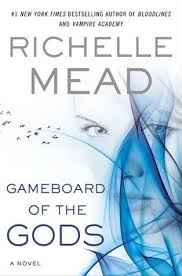
Book Review: Gameboard of the Gods by Rachel Mead

Pros: fascinating characters, interesting world, exciting climax

Cons: pacing, gods don't make much of an appearance

RUNA - the Republic of United North America - was founded after the Decline, a period in which thousands died, and which people believe was caused by three things: disease, religion and cultural separation.  Servitors are tasked with making sure their remaining religions are not a danger to society.  When servitor Justin March is brought back from his exile in Panama to take on a murder investigation with unexplainable evidence, he knows it has something to do with his own inexplicable experiences in the past.  One of which left him with two ravens in his head, and an unknown god asking for his devotion.  He's got less than a month to solve the case before another person is murdered and he and his ward are deported.

For a bodyguard he's given Mae Koskinen, a member of the praetorian guard, elite soldiers with implants that provide faster reflexes and greater strength.  A member of the upper class, which was allowed to avoid the gene mixing forced on others after the Decline, Mae has surprisingly perfect genes.  While finding each other attractive, a misunderstanding upon meeting creates tension between them, even as Mae attracts gods looking for perfect followers.

The novel jumps between three viewpoints, those of Justin, Mae and Teresa, Justin's ward from Panama, whom he's hoping to give a better life.  Teresa, as a fish out of water, is the reader's introduction to the politics and history of this new world.  The author builds things slowly, making you piece together what's happened.  Only through Teresa do you get any concentrated information.  There are no info dumps.  You have to pay close attention to what's being said as conversations are completely natural, since the characters know the context for what's happening, even if you, as the reader, don't.  As such, it takes a while to feel comfortable in this world.

This is the first book of a new series and is basically set up for what's to come.  The aspects of the book that interested me, the murder mystery and the idea of gods playing with the lives of humans, were not as central to the plot of this book as I'd expected.  The investigation into the murder stalls a bit and only picks up around the half way point in the book.  As a result, I found the pacing to be very uneven.  The opening is fascinating with a lot of information being imparted to the reader.  Then there's the move to the RUNA, where stuff happens, including learning most of the information about the country's background, but little plot development.  The plot picks up again and things stay interesting until the climactic ending.  The second quarter stalls though, and as a reader I couldn't understand why so little was being done with regards to the murder investigation.  I was hoping for something akin to Three Parts Dead by Max Gladstone, but what I got was a strange not quite romance, with the protagonists obviously wanting each other but kept apart for various reasons.

While I loved Mae and Teresa, there were times Justin drove me nuts.  He's such a smug SOB.  Still, watching the characters interact was amusing, even when either Justin or Mae manufactured another reason they couldn't have sex again.

I was disappointed by how little the gods showed up.  The ending makes me hopeful that this aspect will have a larger role in the next book.  Indeed, this more than anything made the novel feel like a set up.  It was as though this entire book was for readers to understand the world and characters so the next book could start dealing with the gods and their intrigues.  Not to say that this book ignored the intrigue, the gods do make appearances, but both Mae and Justin try to ignore what's happening until they're no longer given that option.

Speaking of Justin and his god, I was surprised that it took him so long to figure out who He was.  The rune, I thought, gave it away pretty quickly.

I'm not sure who to recommend this book to.  There's a little bit of everything - fighting, romance, mystery, dystopia - but not enough of any one thing to say: "This is for you if you like..."  I suspect the next book will have more focus, given how this one ended.  The writing is good and the series shows promise, yet I feel this book leaves the reader wanting more.   

Tuesday, June 4, 2013

Book Review: The Long Walk by Stephen King (Writing as Richard Bachman)

Pros: creepy premise, really get to know the characters, thought provoking

Cons: don't learn much about the world or why the walk is put on, crass discourse

Every year 100 teen boys join the Long Walk.  They walk at 4 miles per hour, day and night, until they can't go any further and are given their ticket.  The prize for the winner is great.  But it's a long, long road.

This is a character driven dystopian novel that focuses on a small group of walkers in the current year's Long Walk.  The characters become very real, three dimentional people.  Which makes reading the book difficult, as you're slowly watching them die.

As the walk progresses and the characters discuss why they've joined it and who will survive, you're left questioning many things as the reader - are you the same as the crowd that lines the road, hoping to see blood?  Or are you one of the boys, learning that you don't want to die because death is suddenly so close?  Unlike the crowd you see the characters as human.  You feel their pain.  As someone who walked the last 100+ km of the Santiago de Compostella pilgrimmage in 5 days, I really did feel their pain.  But even as you feel their pain and sympathise with their situation, you're still a spectator, safe in the knowledge that you can stop walking, sit down, enjoy today with the knowledge that tomorrow is coming.

The book also makes you think about peer pressure, and how much easier it is to go with the status quo than to fight it, even when you life is on the line.

I was disappointed that you don't learn much about the society that allows - nay encourages - the Long Walk year after year.  Clues in the text indicate that America has become in some ways a police state, but the extent of it is hidden from the reader.  Similarly, the early text leads you to believe that the boys volunteer for the walk, which isn't quite the case.

I wasn't a fan of some of the boys' discussion, but I accept it as realistic.  There's some crass humour as well as discussions of bodily functions, etc.


If you liked The Hunger Games or Battle Royale and want a less violent, more introspective version of the same ideas, then check this out.

Thursday, March 21, 2013

Book Review: Bioshock: Rapture by John Shirley


Pros: very interesting and complex characters, city founder has a unique philosophy, slow apocalypse, references to the game are subtle, has a sense of closure so it works as a novel not just a game history 

Cons: don't learn as much about certain people/items from the game as I'd have liked, major spoilers for those who haven't played the game

Bioshock: Rapture is the prequel novel to the Bioshock video game franchise.  It explains the founding - and ultimate deterioration - of the undersea city, Rapture.  Andrew Ryan, the industrialist who designs and builds Rapture has a philosophy upon which his uotopia is based, summed up in the following quote from the game:

"I am Andrew Ryan and I’m here to ask you a question: Is a man not entitled to the sweat of his own brow? No, says the man in Washington. It belongs to the poor. No, says the man in the Vatican. It belongs to God. No, says the man in Moscow. It belongs to everyone. I rejected those answers. Instead, I chose something different. I chose the impossible. I chose....Rapture. A city where the artist would not fear the censor. Where the scientist would not be bound by Petty morality. Where the great would not be constrained by the small. And with the sweat of your brow, Rapture can become your city as well."

The book is a slow apocalypse taking place in an enclosed environment, with characters and quotes from the games scattered throughout.

The novel is told through several points of view, predominately those of Chief Sullivan, Bill McDonagh and Frank Gorland.  People familiar with the game will recognize - and probably read with more interest - scenes with Brigid Tanenbaum and Dr. Yi Suchong (the creators of ADAM and EVE), Frank Fontaine and others who get briefer attention.

There are two groups of people who would read this book, 1) those who have played the game and want to know more of the back story associated with the game and the people whose tape recorded messages you hear played throughout the game, and 2) those who haven't played the game, but who are interested in it or just want a decent soft apocalyptic / dystopian novel.

The book contains some major and minor spoilers for the game if you haven't played it yet.  Most notably it explains who Atlas, the man who guides you through the first game, is.  As a book independent of the games, the author did a good job of creating one narrative thread that extends beyond Rapture, giving the text a narrative arc with an element of closure.  Since the book otherwise ends where the first game begins, this helped give it closure independent of the games, for those who might be interested in an apocalyptic story but who otherwise aren't interested in playing the game.

As a lot of the character explanations in the game happen during fights, the book does a great job of explaining things - in sequential order.  The discovery of ADAM and the creation of EVE were very interesting, thought I'd have liked learning more about how the Big Daddies were made.

Because the book covers so much time, some characters, who get levels in the game, are barely touched on, like Dr. Steinman, Julie Langford and Sander Cohen.  And most of the events in general are glossed over.  Even with such fundamental aspects of the game as ADAM and EVE, the book doesn't go in depth, allowing the mystery of the various Plasmids (psychic powers obtained via taking ADAM) to survive.  Also, some common elements of the game are late additions to Rapture, like the Circus of Values vending machines, and so only show up at the end of the book.

As an apocalyptic novel it succeeds quite nicely.  The book doesn't depend on an immediate failure of everything as films like Jurassic Park and Westworld do, where one action (or several actions in one night) undermines everything quickly, Rapture faces a slow decline, but one heightened by the fact that the people living there are unable to leave when things start to go bad.  There are economic problems, ideological clashes led by those who don't like how things are run, Plasmid addictions (compounded by the lack of regulations on science, especially when it comes to testing new drugs), and more.  

I read the book fairly quickly between sessions of watching my husband play the first game, and enjoyed it a lot.  I would suggest, if you want to play the games, to play the first one before reading the book.  In fact, reading it between games gives you a good grasp of the history of the place (and many events from the first game) without spoiling the gameplay.  I did notice a few extremely minor contradictions between what the book said and what characters in the game say, but they're so hard to catch I found myself questioning my memory over them.  The writing is good and the story is quite interesting. 

Tuesday, February 26, 2013

Book Review: The Office of Mercy by Ariel Djanikian


Pros: thought provoking ending, didn't read like a dystopia but ended like one

Cons: protagonist is very naive and makes some questionable decisions

Natasha Wiley lives in America-Five, one of several enclosed cities set up by the Alphas to protect the people from the evils of the outside world: suffering and death.  She works in the Office of Mercy, whose job it is to end the suffering to the tribespeople living outside their walls, by giving them a quick, merciful, death.

But she starts to doubt her mission and the 'wall' she's been taught to keep up between herself and the humans living outside.  She empathizes with them, and when she comes face to face with some tribesmen, she makes choices that forever change her life and the lives of those around her.

This book was problematic for me in that I had certain expectations about what was going to happen, given that it's a dystopian novel, that the author didn't follow.  The bad thing about this was that I spent a lot of time thinking about how I would have done things to elicit the response I thought the author was going for rather than enjoying the fact that this dystopian novel was going in directions I couldn't predict.  Looking back on the book after finishing it,  it followed the dystopian conventions, just not in a way that's easily recognizable while you're in the middle of it. 

Natasha is a complex individual.  She's learned the propaganda of the inside and has helped 'sweep' (ie kill) tribespeople in the past via the intelligence she's gathered on them.  However, her upbringing has left her surprisingly naive with regards to the tribespeople.  Despite watching them on screens in the Office of Mercy she doesn't seem to understand how difficult life outside really is.  And while her sheltered upbringing does make it understandable that she not comprehend how people relate to each other in a war like situation, some of her decisions are still frustrating to read.  Instead of understanding them as separate people with their own motivations and drives, she projects her own desires on the tribespeople, something she's been very specifically trained to avoid doing, and makes decisions based on faulty reasoning.  Indeed, she makes decisions that lead to consequences she never considered possible.

Part of me wanted Natasha to get away with her plans, as ridiculous as they seemed, so she could have a happy ending.  And part of me wanted to see her come face to face with the consequences of her actions in a true coming of age style ending.  Because I wasn't sure what the author was up to, the conclusion took me completely by surprise.  In retrospect all the clues were there, but my uncertainty with regards to what message the author was trying to get across made the ending more exciting.

In the middle of the book Natasha falls in with a group of malcontents in the community who also believe the sweeps should stop.  I found it interesting that rather than portray these people as freedom fighters in her eyes, they came off as crackpots.  Even when she was working with them.

There are several discussion possibilities for this book with regards to how people are portrayed and how/if we project our own beliefs on them rather than seeing them for who they are.  I was surprised that a group with the opportunity to brainwash their citizens so easily (as propaganda does to the young) would end up with so many malcontents without some sort of outside force giving opposing views.  Do people question their beliefs if they're not faced with a reason to?  Under what circumstances?

The book uses several conventions from both post-apocalyptic and dystopian novels.  The ending packs a punch though some of Natasha's decisions are hard to swallow and may turn off readers who want a grittier read. 

Tuesday, February 19, 2013

Book Review: Dualed by Elsie Chapman


Pros: interesting premise, fast paced ending

Cons: protagonist isn't very likable and makes unwise decisions,  no social commentary

For Parents: no language or sexual content, lots of gun and knife violence 

West Grayer's world is an enclosed city.  Fear of those on the outside breaking in created a law that all babies are born with the physical aspects of two sets of parents, genetically altered to look like identical twins.  Sometime between the ages of eleven and eighteen both people are activated.  At that point they have thirty-one days to kill their Alternate (Alt).  If neither completes, they'll both die.  West's oldest brother and younger sister were both killed by their Alts.  Her mother died as a PK, a Peripheral Kill, during someone else's completion and her dad's just committed suicide.  West is determined to survive her activation and prove she's the best qualified for their city's way of life.

This is a teen book adults won't enjoy as much as the intended audience.  As a protagonist, fifteen year old West is too determined to do things herself, doesn't need help and makes her decisions with the idea that her actions don't impact anyone else.  She's angry and feeling unworthy of being the alt left alive, and makes choices that cause her to feel these things more over time, rather than less. 

Despite how the synopsis sounds, this isn't a cat and mouse hunt between the girls like Marie Brennan's fantasy duology Doppleganger and Warrior and Witch (republished as Warrior and Witch).  It's focused primarily on West's avoidance of her assignment, though the ending does have some tense scenes when she's finally on the prowl.  

It's also not a vehicle of social commentary, the way Battle Royal and the Hunger Games are.  There's no deeper meaning to why the kids are forced to kill each other or much in the way of questioning its efficacy of turning out a society of adults prepared for - and ready to repulse - an invading army.

I found West's decision to become a striker interesting as I would have expected assassinating a legal target to be easier than killing random people.  I wanted to see more of the psychological effects that killing had on her.  Instead she's emotionally shut down (which is an effect, but not the one I'd expected).  I didn't quite believe she would be accepted so readily as a striker.  I would have expected their qualifications required more than merely a desire to become one.  She should have had to pass some sort of test of skill and/or discretion before she got the tattoos.

I expect teens will love this, while adults who want more philosophical discussion in their books may want to give it a pass.

Tuesday, January 15, 2013

Book Review: The Bridge by Jane Higgins


Pros: thought-provoking, characters are three dimensional, shows war for what it is

Cons: Southside people accept Nik's story too readily, some names are mentioned without context so when they're mentioned again it's hard to remember who the person was

For Parents: minor swearing, violence (not excessive, but it's a war situation, so: assassination, bombs, beatings, minor torture etc.), no sexual content

Seventeen year old Nik's brown skin marks him as a Southsider, though he's attended school on Cityside since he was 5.  His intelligence has him earmarked for the Internal Security and Intelligence Services (ISIS), so no one understands why they pass on recuiting him.  When the school is bombed he's suspected by ISIS of collaborating with the enemy.  In an attempt to leave the city with friends from school, one of them is kidnapped by Southsiders and Nik and a girl team up to get him back.  Knowing only the language and anti-Southside propoganda, the two have no idea what they're walking into.

The story focuses on their search for the boy in Southside.  There are elements here that are hard to believe at first, as the two are obviously unaware of local customs and the girl's language skills are minimal (I'm calling her 'the girl' to avoid spoiling the first 75 pages of the book more than necessary).  Nik lands in a position where he's privy to sensitive information, something that's hard to credit given his refusal to give more than his name and place of origin (one real, the other a lie).  When his high intelligence is revealed, the characters start to question how a barely educated teen (as would be the case if his story were true) broke encrypted codes and then just accept his information with only a little hesitation.

That issue aside though, the book is brilliant.  The pacing is fast, though the characters don't know how to go about looking for the boy, enough is happening with regards to Southside politics that the book never drags.  Soon enough the teens learn information of value and events spiral out of their control as they're drawn deeper into a faction war among the Southsiders.

The political manuverings and history of the war are interesting, though the history isn't dealt with in as much detail as this reviewer would have like.  Higgins' world-building is solid, with a bloody past, religious rituals, class and economic troubles, etc.  It's obvious she's considered aspects of society that are never fully mentioned, but season the story nonetheless.

The characters are all three dimensional, with often tragic pasts, reasons for their actions and motivations, and difficult decisions to make.  Though the book is from Nik's point of view, there are several strong female characters, and several characters of colour (including him).  Discussion of race doesn't come into the book much, beyond Nik's fitting in better - with regards to looks - on Southside than his companion.  But it is somewhat problematic as Citysiders are described as being predominantly white, while Southsiders are mixed (easterners being white and southsiders being black).  This reviewer would have liked learning more about where the Southsiders came from (it's explained that they're refugees coming up from the South and East but Nik doesn't know more than that).  Instead, class distinction is used for the reason for the hostilities between Southside and Cityside.  And when it comes to positions of power, men and women are treated equally - on both sides.

The only problem with the characters, beyond the Southsider's easy acceptance of Nik, was that a few of them, like Commander Vega, are occasionally referred to by their first names rather than their titles.  It's realistic, but the extra names were hard to remember.  Similarly there were a few times when a character was mentioned briefly by name and then mentioned again a few chapters later and it was hard to remember who they were referring to.  

While many teen dystopian books take a sort of Stockholm syndrome approach, with the protagonist learning that their way is wrong and the other side's better, this one does something different, and more realistic.  It shows how both sides in war use propoganda to control their people.  It brings home how ideology, fanaticism and the belief in one's cause can blind people to the reality of war - that people are dying.  War is horrifying and no amount of 'an eye for an eye' will bring it to an end.  The book is about how regular people - children even - get dragged into the fighting, as the war kills their loved ones, destroys their homes, limits food and medicine, and leaves them with nothing but ashes.  It's about the choice every person in a war torn area makes, to continue the fighting in an attempt to utterly defeat the enemy or to try to work towards peace.

This theme, that both sides in a conflict can be evil, was used in Mockingjay (by Suzanne Collins).  In that book, the rebel leadership is shown to be just a bad as the learders of Panem.  Putting them in charge would not have changed anything but whose kids competed in the Hunger Games.

We're used to having one good side and one evil side when we think of war.  The idea that both sides do evil things is something we prefer to hide and forget.  Everyone knows that the Axis in World War II did horrible things.  But how many attrocities did the Allies commit?  There were internment camps, boats full of Jews turned back at North American ports, with nowhere left to go but back to Germany.  There was rioting and rape.  Horrific bombs were dropped not only on Hiroshima, but also on Nagasaki.  This novel acknowledges that by the end of hostilities, neither side in war is 'right', regardless of who started it and why.  It's a bold position to take and the message of the book really hits home.  War is evil and there has to be a better way.

It's a powerful, moving story.  And this reviewer can't recommend it enough.

Tuesday, December 18, 2012

Book Review: We by Yevgeny Zamyatin


Pros: interesting ideas, historical significance

Cons: unsympathetic characters, disjointed narrative, scarce descriptions

D-503, builder of the INTEGRAL, the space ship that will bring the OneState to the stars, starts this missive with the intent of including it in the propaganda transported by the ship.  But his treatise on the virtues of the OneState gets hijacked when the mysterious I-330 crosses his path.  Suddenly his writing is more about dreams and hopes than the realities of life and the happiness brought by a lack of freedom.

The fun of reading dystopian fiction is seeing how things run in this 'perfect' society.  We is surprisingly lacking in this regard.  We learn that buildings are made of glass (with blinds that can be lowered only for scheduled - and approved - sexual encounters), that lives are carefully regulated with the exception of two personal hours each day, and how crimes are punished.  There's a glass wall keeping the outside world out and people eat a manufactured petroleum product.  But there's no information about how children are authorized and raised (I say 'authorized' because one character becomes pregnant illegally).  There's little description about the work D-503 does, though it's quite important to the state.  There are only vague references to what is taught in the auditoriums each evening.  In other words, you get tantalizing images but no full picture of life in the OneState.

The writing style is first person narration, but the narrator has trouble forming complete thoughts - or at least, writing the ends of his thoughts down.  The reader must constantly work at understanding his meaning, which isn't always easy.  This is especially noticeable when recounting conversations.

The characters aren't very sympathetic.  I felt sorry for O-90, but really disliked I-330 and even D-503 became irritating in his lack of clarity and indecision.  I wasn't sure how to take the description of R-13 and his 'African lips' (one of the few character descriptions given).  It's unclear if he's actually African (and therefore the society is multiracial) or if he just has large lips.  I-330 seems too mercenary in her actions and, given his narrative style, it's impossible to tell if she is just using D-503 or if she honestly cares for him in some way.

While some of the ideas posited were interesting, this isn't a book I can recommend outside its historical significance as one of the (or even the?) first dystopian novels.  Many of the themes and plot points used in We are also used in the more readable - and more famous - 1984.  Given the choice between the two, I'd suggest 1984.

Tuesday, November 20, 2012

Book Review: Repossession Mambo by Eric Garcia


Pros: fascinating protagonist with very interesting life, great narrative style

Cons: some crass scenes, light world-building

The unnamed protagonist of Reposession Mambo (republished as Repo Men) is typing his memoirs on an old Underwood typewriter in an abandoned hotel.  Once a level five repo man, charged with repossessing the artificial organs of those who stopped making payments, for the Credit Union (and others), he's now on the run, having his own artificial organ and unable to pay the extremely high interest rates.

Despite being character driven I never found my interest lagging.  The protagonist's life is so interesting, from his 5 ex-wives, to his job as a repo man, to his time in the military and friendship with Jake, it's a non-stop adventure.  He's a mix of contradictions.  He's described by a therapist at one point as having a great capacity for love, but each of his ex's call him a bastard.  He's not a cold hard killer, but has no problem ripping out someone's liver or heart, despite knowing the person's going to die because of his actions.  There's a brief mention of him repossessing children's organs, but no description (for which I'm thankful).  Perhaps the author realized that heading in that direction would destroy any sympathy the protagonist otherwise gains.  And he does gain some.  He's somehow a likable guy, despite the work he does.  

The narrative is disjointed, jumping from time to time, keeping you on your toes trying to figure out what's happening and why he's now on the run.  Within that jumbled framework, comes a fairly linear life story, from highschool through military life, joining the Credit Union and all his wives along the way.  Even the present day story is fascinating, with everything he knows about repo men giving him a better chance at survival.  The mystery of why he's on the run is quite compelling.

As for the negatives, the story is crass at times.  His first wife's a prostitute and there's a lot of sex humour (though no eroticism or graphic descriptions).  It's not on the level of, say, Porky's style humour, but it is highschool style crass humour at times.  While I'm not a fan of that kind of writing, it did fit the book and character and wasn't overdone.

The world-building is very light.  You're only told about what the protagonist finds interesting, namely his life.  He's quite self-centered and focused in that respect.  There's some information about how the organ shops got started and the high interest rates that keep people's names on his pink slips, but not as much about this new world as I'd have liked given the interesting premise of the book.

The ending... I'm still not sure how I feel about it.  Again, it fit the story but I wasn't entirely satisfied by it.  The character has a chance to grow as a person and things don't work out as you're expecting.

A decent amount of action and a fascinating crew of characters make up Repossession Mambo.

Monday, October 29, 2012

Book Review: The Unincorporated Man by Dani and Eytan Kollin


Pros: fully realized dystopian world, thought provoking, interesting characters

Cons: problematic decisions by characters, black & white thinking

Justin was dying of cancer when he had himself cryogenically frozen in an abandoned mineshaft.  Woken 300 years later into a new, and very different world, he realizes that he cannot abide the necessity to incorporate - allowing others to buy and sell parts of him as stock.  He falls in love with his reanimation specialist - a serious moral crime, and is hounded by Hektor Sambianco on behalf of GCI - the reigning corporation - in whose facility he was reanimated.

This is a very slow read and a thought provoking one.  The first 100-150 pages are all character development and world building, as set up for the events later on.  Despite being a slow read, it is by no means a boring one.  The background information necessary for this book is given in realistic ways, rather than info dumps (with one later exception), and delves more heavily into history and socio-economics than most dystopian novels.  

The world is incredible.  It's intricate in all the ways dystopian fiction usually isn't.  Instead of using a corrupt government, the world is focused on corporations and people.  Incorporation means that at birth every citizen has 100 000 shares.  Parents get 20% and the government 5%.  The rest of the person's value is theirs to barter for services, starting with their education.  Saavy people can bargain for a better education at a smaller percentage of their future earnings.  The flip side of the system is that shareholders can dictate where you work, audit you if you make decisions they don't like, and have a say in your life.  People who want more control over their lives can buy back their own shares, gaining majority.  As pointed out by several characters, this system has the effect of making you care for others you have stock in (and anyone can buy stock of anyone else provided they have the cash for it).  You want to see those people succeed so their stock prices rise and you earn money from them.  The downside, and where Justin's problem comes in, is the lack of personal freedoms associated with the system.

Equality between the sexes (or lack thereof) is never mentioned, but there are a few lines that indicates sexual orientations of all sorts are acceptable and, if the names are anything to go by (since physical descriptions are minimal) there's little to no racism.

One of the issues I had with the book was that, like the future of This Perfect Day by Ira Levin, I actually thought it was pretty good.  There's still poverty (discussed/shown briefly later in the book), but the poor all have jobs and houses, are well fed and able to climb to greater things if they're lucky and/or work hard.  It's an issue because the majority of the book consists of Justin bucking society to not only remain unincorporated, but, as he's pushed over and over again by Hektor Sambianco to incorporate, becomes an advocate of unincorporation and freedom for everyone.  This decision creates problems Justin didn't foresee for the world around him.

It's very much a Western idea that things should change to suit the individual rather than society.  Perhaps it's because I lived in Japan for two years, but I actually believe the good of the many does outweigh the needs of the few.  Justin believes that he's right and there can be no compromise.  His point of view in the book that his way (so called freedom) is better than incorporation, especially given the reality of the world the Kollin brothers have created, is arrogant.  He simply doesn't understand enough about how this world works to make the determination that incorporation is wrong, a point which is pointed out to him by several of his friends later in the novel.  Indeed, his lack of understanding when it comes to 'the poor' of this new world (as he's rich and doesn't need to associate with them or live like them) just further removes him from reality.  And when things start going wrong in his name - well, all I could think of was Paul Atreides from Dune, who as Muad'Dib unleashed a war that he didn't want but couldn't stop.  Justin doesn't realize the consequences his actions will have on the system at large, consequences that he cannot stop, whether he wants them or not.

While I hated Hektor Sambianco as a person, there were times when he was the only one to see the consequences of Justin's actions beforehand, making his own actions sometimes understandable.  Having said that, he causes more problems than he solves by harrassing Justin.  He views the world in very black and white terms, much as Justin himself does.

It's a fascinating novel, and a great addition to the dystopian oeuvre.  If you're looking for action, look elsewhere.  If you want a book that will make you think about the way the world works, then pick this up.

Tuesday, October 23, 2012

Book Review: Diverse Energies Edited by Tobias Buckell and Joe Monti


Pros: wide variety of dystopian worlds, protagonists of diverse races and sexual orientations

Cons: in several of the stories the characters are in lower class/servile roles to white people, 

For Parents: no language, minimal violence, one story hints at sex but there are no descriptions, three of the stories have positive GLTBQ content 

This is a great collection of stories.  Not only do they feature people of colour in lead roles, there are also several positive portrayals of gay/lesbian teens in worlds where their choices are normal and accepted by those around them as such.  Each of the dystopian worlds depicted is very different, with some ending with hope and others less optimistic.  I was a little disappointed that a few of the stories cast their coloured protagonists in subservient roles, as I expected this anthology to give a more hopeful viewpoint regarding race in the future (much as it does do for its GLTBQ characters).  But there's a lot to love about this collection, including the fact that a portion of the proceeds from the book are going to the Carl Brandon Society's Octavia E. Butler Memorial Scholarship Fund.  If you or your kids are into dystopian fiction, this is a must for your bookshelf.

***** "The Last Day" by Ellen Oh - It's the 15th year of the war between the East and the West and two 12 year old boys are working to help provide for their families in rural Japan.

This is a very powerful alternative history.  If you've read Black Rain by Masuji Ibuse or seen the Studio Gibli film Grave of the Fireflies (Hotaru no Haka), you'll know where this story is headed.

*** "Freshee's Frogurt" by Daniel H. Wilson - A frozen yogurt worker gives a police report about the domestic robot that malfunctions and attacks him and his co-worker.

It's not mentioned in the collection, but this story comes from Wilson's Robopocalypse.  I was unable to finish that novel due to inconsistencies between the frame stories and the narratives they're retelling.  For example, this story is told after the fact, as a police report, yet for some reason the narrator is using present tense language which, I'll admit gives the story more immediacy, even though it makes no sense.  At one point the narrator says, "Man, I hope he's out of it" after watching his co-worker get injured.  The problem is, this happened sometime in the recent past, and no longer applies to where the narrator (or his co-worker) is now.  

The story itself is well written, if designed to be part of a larger narrative.

***** "The Uncertainty Principle" by K. Tempest Bradford - Iliana can tell when a change is coming, but she's the only one afterwards who recognizes that the world is different.

This story reminded me of Ursula K. Le Guin's The Lathe of Heaven.  The writing is great and the story interesting.  The protagonist is feisty and proactive.  The world-building is necessarily limited.  I'd love to see this fleshed out as a novel, detailing what's changed as Iliana becomes old enough to know the history, etc. from previous timelines.

**** "Pattern Recognition" by Ken Liu - David and the other boys and girls at the Volpe Ness School are taught that the Outside world is a horrible, desolate place.  Inside the compound, the kids work on pattern games during the day, even as he wonders more and more about the outside world.

This premise - of a school of kids kept separate from a post-apocalyptic world - has been explored in several teen novels (Eve by Anna Carey comes immediately to mind), but it's the ending of this story that makes it unique.

**** "Gods of the Dimming Night" by Greg van Eekhout - It's the third winter without a summer in San Diego, and 17 year old Edward is out begging for work to help his family survive when he sees the flyer for a NorseCODE medical study that pays well.

Interesting use of Norse mythology.  I liked the author's definition of heroism at the end.

*** "Next Door" by Rahul Kanakia - Aakash's family squats in the garage of a family of strangers.  But unlike most of the strangers who wear implants, this father and son are aware of the hoards of street people around them.  When Aakash and his boyfriend see the son of his stranger family trying to break into the conservatory, they wonder if their dream of having their own pest free place to squat is finally within reach.

A very unique dystopian world, with gross overcrowding and a huge bedbug problem.  Definitely not a world I'd want to live in.  The story's a little bittersweet with an open ending.

*** "Good Girl" by Malinda Lo - Kyle looks pureborn despite her mixed blood, allowing her to live above ground.  She meets Nix in a basement leading to the tunnels to ask if her brother, who disappeared the previous year, lives there now, and finds something unexpected.

Another bittersweet story about forbidden love and survival in dangerous circumstances.  Well written but the ending's a little depressing.

*** "A Pocket Full of Dharma" by Paolo Bacigalupi - Wang Jun is a beggar boy in old Chengdu.  When he's witness to a murder, he ends up with an object that men will kill - and die - for.

Kind of long, the story moves around a lot, with Wang meeting up with various people, trying to figure out what to do with the object.  Very little is told about the interesting living architecture that is slowly growing over the city into luxury housing or the plague that crippled the boy.  Still, it has its moments.

*** "Blue Skies" by Cindy Pon - The unnamed narrator kidnaps a you girl for ransom.  You, the haves, live in helmeted suits, with purified oxygen, water and food.  This provides them longer lifespans than the rest of the human race.  

The story ends a bit abruptly, but I found the characters very interesting and the have/want conflict familiar, if taken to extremes.

**** "What Arms to Hold Us" by Rajan Khanna - Ravi drives a golly, a mechanical mining machine controlled via a crown powered by the mineral they're digging, primosite.  But Ravi dreams of someday moving on from the mines, like his older brother.

Minimal world building doesn't detract from the emotional punch of this story or the hopeful ending.

**** "Solitude" by Ursula K. Le Guin - Serenity's mother is a scientist who, when the inhabitants of Eleven-Soro prove to be enigmas to the previous Observers, decides to use her children as a means of learning how the society works.  Growing up as one of the natives, Serenity has more of a connection to her new home than her mother's people.

This is a great story about learning from other cultures and accepting that one people's way of seeing the world isn't every people's way of doing so.  It's a longer story and while it covers a lot of time, it's interesting for its characters and world building.  

Tuesday, September 18, 2012

Book Review: Skylark by Meagan Spooner


Pros: very unique dystopian situation, very good opening, terrifying potential fate for Lark, end reveal of Lark's abilities was interesting

Cons: protagonist is conflicted, middle dragged, it became tiresome watching Lark get saved over and over again

For Parents: one swear word, some violence (killing), no sex

At sixteen Lark is older than the other kids at school, but she won't become a full adult until she's harvested for her magic and assigned her place.  Magic runs the city and keeps up the wall that protects them from the ravaged outside world.  When she's finally called, she's apprehensive about the procedure no one talks about and curious why they waited so long to harvest her.

An unescorted jaunt around the famicility shows her someone's horrific fate, a fate she soon realizes she might share.  She's able to regenerate her magic, a lost skill and valuable - for harvesting.  Fleeing for her life and her sanity, she breaches the wall and discovers how bad things outside really have become.  She knows she will be hunted.  She also knows there are other people outside the wall who are like her.

Kudos to Spooner for creating a dystopian setting that was substantially different from the rest.  It has touches of steampunk and a truly terrifying fate for Lark should she remain in the city.  After Lark leaves the city however, the setting becomes commonplace, post-apocalyptic (even if the apocalypse was caused by magic).

While I liked Lark, she waffled between competent and needing to be saved too often.  I understand that she didn't know how to survive in the wild, and I was ok with Oren helping her, but having him leave and come back to rescue her over and over again became tiresome.  This repetition made the middle section feel too long and drawn out.  She also waffled between altruism and necessity when it came to violence and dealing with those she met outside the wall.

The ending picked up the pace again and returned to the high tension, and high stakes, of the opening.  While I wasn't keen on Lark's choices at the end of the book, it was an exciting ending.

A good book for those who want a different dystopian setting.  

Out October 1st.

Saturday, July 14, 2012

New Author Spotlight: Hillary Jordan

New Author Spotlight is a series designed to introduce authors with 3 books or less in the different SF/F subgenres. Today's spotlight shines on Hillary Jordan! Her books are:
  • Mudbound by Hillary Jordan (Harpercollins Canada)
  • When She Woke by Hillary Jordan (Harper Collins Canada)
Here's the cover copy for When She Woke:

In the mid –21st century, a young woman in Texas awakens to a nightmare: her skin has been genetically altered, turned bright red as punishment for the crime of having an abortion.

Inspired by The Scarlet Letter, When She Woke depicts an American dystopia where terrorist attacks, natural disasters and a pandemic causing infertility have swung the country to the far right, and convicted criminals are “chromed” according to the nature of their crime and then released. A stigmatized woman in a hostile and frightening world, Hannah Payne must seek a path northward to safety. Her perilous journey becomes one of self-discovery and transfiguration as she realizes that faith, love and sexuality are not just political. They'’re personal.
Check out her books if you enjoyed any of the following:
  • The Scarlet Letter by Nathaniel Hawthorne (Simon & Brown)
  • The Handmaid's Tale by Margaret Atwood (Bantam Books of Canada Ltd)
  • Veracity by Laura Bynum (Gallery Books)

Friday, June 8, 2012

Author Interview: Ryan Oakley

Novels: Technicolor Ultra Mall

Website: thegrumpyowl.com

Voted by Toronto Life as one of city's 12 Most Stylish People.


> What is Technicolor Ultra Mall about? 


It's about capitalism and violence. About how the two intersect. How either might be versions of the other. And how all this effects our relationships.

There's also a very human story at its heart. About a young man trying to get out of the situation life has dealt him and be a better person.

It's about people and how we dehumanize them and ourselves when we view them as products or as means to an end.

> How would you categorize your book? 

It's probably easiest to call it a dystopia though I view it as a satire and a love story with a large dose of black comedy. It's about our world.

The politics of the thing are pretty front and centre but, as a writer, I see politics as incidental. I'm more interested in characters.

Having said that, one of the things I enjoy about speculative fiction is that it allows the setting to be a character. I try to take full advantage of this.

People do tend to view the world I've created as being a villain, and the book, therefore, as dystopian but that's a matter of perspective. Some people in Technicolor Ultra Mall's world are doing quite well. Others are not. Some people in our world would trade places with any of them.

>Would you change places with any of your characters?

Doing so is how I wrote it. I wouldn't do it again.

> What made you want to be a writer?

I want to write. Being a writer is a side effect.

I have different reasons for wanting to write. Usually, there's a question. Or an unbeckoned image that I need to explore. Sometimes, just a need to subvert. Often, it's a combination.

I also have this weird fear of losing my memories. It's similar to the sense one has after waking from a dream. When you reach for the notebook.

That feeling, more than anything, is probably what started me.

> How does it feel, having your book nominated for the Prix Aurora Award?

I never expected anyone to even publish Technicolor Ultra Mall. To find it nominated for an award is startling. I almost feel like I did something wrong or have been misunderstood in some important way.

> What were your literary influences for Technicolor Ultra Mall?


I was strongly influenced by the Situationists, particularly their concept of détournement – that is, putting existing work in a new context with the goal of undermining it-- and by John Dos Passos by way of John Brunner.

The main influence was anti-literary. It was the act of watching television.

> What's the first novel (published or unpublished) that you wrote and how long did it take to write it?

The first novel I wrote was in highschool. It took me a few months to write it. But it was terrible. At least, I assume it was. I threw it out without looking at it.

Technicolor Ultra Mall is my first published book but my fourth or fifth novel. It took me about nine months to finish the first draft and about three months of rewrites before it was submitted.

> What was the hardest scene for you to write?

To answer this without spoilers, I'll try to make an educated guess about the reader's response to my work.

The hardest scene to read in the book was the hardest for me to write. To this day, I don't know if I handled it well or if it could have been handled well. People have told me they felt physically ill while reading it. Others have put the book down. I felt that way writing it.

I threw up, lost weight and could not sleep.

All I can say is, I really think that if that scene was not there, the entire meaning of my book would have not only been lost but reversed. It would've been some third rate celebration of the violence I detest. The book would've been that which it purports to despise. I sometimes wonder if it is.

> When and where do you write?

I write in what we call the Brown Room. It's a brown room.

Because I have a wife, a roommate, two cats and a dog, I do most of my writing between three and seven in the morning. That's about the only time I get to myself and I had to negotiate it.

> What’s the best/worst thing about writing?


The best thing about writing is the sense of remembering something that has never happened. The worst is when it happens.

> What is something you didn’t know about the publishing industry before you had your first book published?


I had no idea that it was all run by a secret cabal that initiates people with a blood ritual. Had I known that, I would've brought a change of pants.

> Do you have any advice for hopeful authors?

Write the books you want to write. And pay no attention to trends or what you think people are buying. Also ignore all those folks who talk to you about branding. One day, you're going to die. And I doubt you'll be thinking 'I wish I spent more time branding myself.'

> Any tips against writers block?


Enjoy it while it lasts.

> How do you discipline yourself to write?


I force myself to sit and listen. If I'm lucky, the ghosts have something to say.

> How many rejection letters did you get for your first novel or story?

Not many. I've always been really lazy about submitting. Hearing about other people's stacks of rejection letters always makes me uneasy. 

Wednesday, May 2, 2012

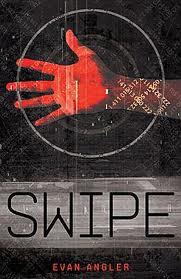
Book Review: Swipe by Evan Angler


Pros: well drawn characters, interesting world, some great twists, thought provoking

Cons: despite his job, Erin's father seems clueless regarding her intelligence and snooping

For Parents: no swearing, no sexual content, little violence (a few people get punched / hit with items, but nothing graphic)

Logan's been paranoid since his older sister died during her Pledging.  His thirteenth birthday, and the day of his own Pledging, is only a few months away and he's terrified of the same thing happening to him.  But Pledging means getting his Mark.  And only the Marked can hold jobs and buy things.  Then he discovers that his paranoia is justified, and his entire life changes.

Erin doesn't want to leave Beacon for Spokie.  But her dad's been transferred there for his job doing 'government work', whatever that means.  Her decision to snoop into her father's private papers opens her eyes to his purpose in Spokie; to stop a man kidnapping local children before they can take the Pledge.  She decides that the sooner this man is caught, the sooner she can return home.

The two kids team up to keep Logan from being the next to disappear.

Swipe tells of a future where global war has caused such problems that large parts of the US, Canada and Mexico - now called the American Union - are uninhabitable.  There are no religions.  The AU and the European Union are close to creating a Global Union.  Part of this new union required the Marking of all AU citizens.  Indeed, the only way to be a citizen and benefit from its privileges requires getting the Mark.  Those who choose not to get the mark are either servants, have someone with a Mark to support them or live in slums.

The world has some interesting new technologies to replace the more wasteful items of today.  Few people use paper anymore, tablets being mainstream.  Similarly, since air travel is now so expensive and cars the luxury of the super rich, people cross the country (if they need to) by magnetrain and get around cities by electrobuses and rollersticks (a device the size of a skateboard with a handle that works like a segway).  

Logan is a great character.  He's introduced as the boy who cried wolf, being convinced for years that someone's watching him.  He's neither popular nor friendless.  He's a pushover until he finds a reason to fight back.  

Erin on the other hand is very brave and bold, coming up with new plans for how to catch the kidnappers.  Not always good plans, mind you, she's only 13, but she is quite clever.

The book has some great twists, heading in directions I didn't expect.  I especially liked that there were no easy answers for the protagonists.  They make mistakes and at the end they each make decisions that work for them - and their view of events.  The book is fast paced and a quick read.

My only complaint was with how long it took Erin's dad to figure out what she was up to.  He seemed surprisingly clueless as to her keen intelligence.

A great book for adults, teens and maybe even younger kids - with some interesting discussion possibilities.

Tuesday, April 17, 2012

Book Review: Partials by Dan Wells


Pros: realistic societal tensions in a post-apocalyptic world, compelling quests, strong female protagonist

Cons: don't learn as much about the partials as you'd like, the protagonists get out of several tough situations with surprising ease

For Parents: no sex, no swearing, lots of violence, but nothing too graphic (shooting/death, off stage torture)  

It's been 11 years since the genetically engineered partials rose up against their human creators, unleashing a virus that decimated the human population.  Now, the remaining survivors live on Long Island, most in the community of East Meadow, which, due to its Hope Act of forcing all women 18 and over to give birth as often as possible, has created a resistance movement called the Voice.  Into this turmoil comes a brilliant young hospital intern, Kira.  She wants to study the one thus far unstudied aspect of the plague that still kills all human children born.  Partials.

Partials is quite an adrenaline rush.  There's a lot of action and several quests, starting, but not ending, with Kira's quest to find and capture a partial.  While I wasn't always convinced that their plans would work as well as they did, enough things went wrong that I was willing to overlook how often enough went right.

Kira herself was an interesting character.  She's borderline irritating, in that she's stubborn and 'knows' the best course of action, despite only being 16 and a 'plague baby' (ie, someone born just before the end of the modern world and too young to know what happened with the partials from personal experience).  What redeems her is her reliance on her friends and her willingness to accept a change of plans when necessary.  

What really sets this book apart is in its realistic depiction of society.  There's a wide spectrum of viewpoints, each valid given the circumstances.  East Meadows slowly becomes more and more of a dictatorship, as the Voice attacks escalate and the senate institutes more laws to keep the citizens 'safe', or, as Kira starts to believe, 'controlled'.  Even the principle characters argue over the right and wrong of the senate's decrees.  Particularly the debated decision of lowering the Hope Act to include those 16 and up (which would affect them directly).  The disconnect between the older generation and the 'plague babies', shown by the adults' disdain, was also well written.

My only complaint was that you don't learn as much about the partials as you'd like.  This book is set up for a sequel, so I'm hoping the partials - and ParaGen, the company that created them - will have more of a part to play.

I'll be waiting eagerly for the next book in this series.