Showing posts with label Science Fiction. Show all posts

Tuesday, September 17, 2013

Book Review: The Explorer by James Smythe

Pros: interesting premise, interesting examination of perceived experience vs the larger reality,  quick read

Cons: scientific errors, protagonist gets irritating at times

Six astronauts are on a voyage to explore space, going further than any manned mission in the past.  But almost immediately things start going wrong, and as the crew die - one by one - their reporter, Cormac, the least skilled among them, wonders if their mission will succeed.

This is an interesting novel about the worth of exploration and what it takes to leave everything you know for such an opportunity.  There's a twist at the quarter mark that propels this novel from a simple exploratory mission into an examination of how we perceive events based on limited knowledge, memory vs reality and causality.

We get to know Cormac the most, as it's his POV we follow, but through his observations and experiences we also get to know the other crew members.  The story alternates between what's happening on the ship and the process of being chosen for the mission back on Earth.

Cormac's experiences are interesting but his personality gets a bit grating as things break down and he can't do anything but wait for death.

Twenty or so pages before the end of the ebook, the climax hits.  I eagerly turned the page to find out what happened only to discover that the novel was over and the final pages were an excerpt for Smythe's next book.  This was incredibly jarring and meant I didn't appreciate the open style of the ending as I otherwise might have.

I enjoyed the book enough to pass it along to my husband.  Turns out it was a good thing, as the first draft of this review stated the science was accurate. My husband is a huge hard SF fan and he pointed out several errors the book makes with regards to space.  There's a scene that mildly irritated him where water didn't act the way it would in zero gravity.  But the main problem is that the ship is brought to a halt on several occasions for checks and repairs.  Not only would this waste their fuel, both to stop and to start up again (having killed their momentum), each stop would alter their course, which we're told has been pre-set.  These errors made it harder for him to enjoy the book.


It's an interesting novel, and a very quick read, but those of you looking for hard SF might want to give this one a pass.  

Thursday, September 5, 2013

Shout-Out: Containment by Christian Cantrell


I spotted this on the shelf at work and it's made my TBR pile: 

The colony on Venus was not built because the destruction of Earth was possible, but because it was inevitable…

A brilliant young scientist and one of the first humans born on Venus, Arik works tirelessly to perfect the science of artificial photosynthesis, a project crucial to the future of his home, V1. The colony was built on the harsh Venusian surface by the Founders, the first humans to establish a permanent extraterrestrial settlement. Arik’s research becomes critical when he awakens from an unexplained, near-fatal accident and learns that his wife is three months pregnant. Unless Arik’s research uncovers a groundbreaking discovery, V1’s oxygen supply will not be able to support the increase in population that his baby represents.

As Arik works against time, he begins to untangle the threads of his accident, which seem inextricably linked to what lies outside the protective walls of V1—a world where the caustic atmosphere and extreme heat make all forms of known life impossible. For its entire existence, Arik's generation has been expected to help solve the problems of colonization. But as Arik digs deeper and deeper, he discovers alarming truths about the planet that the Founders have kept hidden. With growing urgency and increasing peril, Arik finds himself on a journey that will push him to the limits of his intelligence and take him beyond the unimaginable.

Sunday, September 1, 2013

Science Fiction and Fantasy Books Coming in October 2013

There might be more errors/omissions than usual this list as Amazon's SF/F listing wouldn't go far enough back for me to do this the way I normally do.  Instead, I had to go through SF and fantasy separately.  I also added the YA category back in.  I noticed some kids books creeping into the list, which I then deleted, but be aware that there might be some kids books.  Oh, and I used the US page (which, come to think of it, might be why I had trouble) rather than the Canadian one.  So these reflect the US release dates.  As always, release dates are subject to change.  If you spot a mistake, please tell me in the comments and I'll correct it.

Hardcover:

Balfour and Meriweather in The Incident of the Harrowmoor Dogs – Daniel Abraham
Esrever Doom – Piers Anthony
Allegiance – Beth Bernobich
Behind the Sofa: Celebrity Memories of Doctor Who – Steve Berry, Ed.
Dark Talisman – Steven Booth
The Necromancer's House – Christopher Buehlman
Star Trek: The Stardate Collection, Vol 1 – John Byrne, Patrick Zircher, Greg Adams & Josep Maria Beroy
Autumn Bones – Jacqueline Carey
Copperhead – Tina Connolly
Memory of the Trees – F. G. Cottam
Childless – James Dobson & Kurt Bruner
The Last Dark – Stephen Donaldson
1636: The Devil's Opera – Eric Flint & David Carrico
The Power of Twelve – William Gladstone
Parasite – Mira Grant
After Dead: What Came Next in the World of Sookie Stackhouse – Charlaine Harris & Lisa Desimini
Doctor Who The Vault: Treasures from the First 50 Years – Marcus Hearn
Johannes Cabal: The Fear Instituted – Jonathan Howard
The Cusanus Game – Wolfgang Jeschke
Fiendish Schemes – K. W. Jeter
Dead Set – Richard Kadrey
Day One – Nate Kenyon
Bastion – Mercedes Lackey
Love in the Time of Metal and Flesh – Jay Lake
The Last Man Standing – David Longo 
The Republic of Thieves – Scott Lynch
Old Mars – George Martin & Gardner Dozois, Ed.
Summer's End – Lisa Morton
Pachyderme – Frederik Peeters
The Wolves of Midwinter – Anne Rice
The Heavens Rise – Christopher Rice
Path of Anger – Antoine Rouaud
Veil of the Deserters – Jeff Salyards
The Estate – Craig Saunders
The Violent Century – Lavie Tidhar
The End of Love – Marcos Girald Torrente & Katherine Silver
Luminous Chaos – Jean-Christophe Valtat & Mahendra Singh
The Bounty Hunter Code: From the Files of Boba Fett – Daniel Wallace, Ryder Windham & Jason Fry

Trade Paperback:

Escaping Home – A. American
Tesseracts Seventeen – Colleen Anderson & Steve Vernon, Ed.
Rage's Echo – J. S. Bailey
In the Company of Thieves – Kage Baker
The Obsidian Heart – Mark Barnes
Tomorrowland – Joseph Bates
Steal the Day – Lexi Blake
Katabasis – Joseph Brassey, Cooper Moo, Mark Teppo & Angus Trim
Coins of Chaos – Jennifer Brozek
Light – Nathan Burgoine
The Demon Abraxas – Rachel Calish
Dreams and Shadows – C. Robert Cargill
Cold Blooded – Amanda Carlson
Iron Guard – Mark Clapham
The Wasteland Saga: Old Man and the Wasteland, The Savage Boy, and The Road is a River – Nick Cole
The Diamond Deep – Brenda Cooper
The Law of Superheroes – James Daily & Ryan Davidson
A Dance of Cloaks – David Dalglish
In Space No One Can Hear You Scream – Hank Davis
Knights Templar: A Secret History – Graeme Davis
The Night Eternal – Guillermo Del Toro & Chuck Hogan
Tales of the Wold Newton Universe – Philip Jose Farmer
Man in the Empty Suit – Sean Ferrell
The Science of Herself – Karen Joy Fowler
Once Upon a Time: New Fairy Tales – Paula Guran, Ed.
Gotrek & Felix: City of the Damned – David Guymer
His Sacred Bones – Ginn Hale
Theodore Savage – Cicely Hamilton
Lighthouse Island – Paulette Jiles
Child of Time – Bob Johnson
Weird Shadows Over Innsmouth – Stephen Jones, Ed.
Dying is my Business – Nicholas Kaufmann
Trollslayer – William King
Scarecrow Has a Gun – M. P. Kozlowsky
Warhammer 40K: Salamanders Omnibus – Nick Kyme
Autodrome – Kim Lakin-Smith
A Sojourn of Sorts – Douglas LeBlanc
Ancillary Justice – Ann Leckie
Lucia's Masks – Wendy MacIntyre
Fire Logic – Laurie Marks
Layman's Report – Eugene Marten
The Book of Ash – John McCaffrey
Red Hill – Jamie McGuire
Things Withered – Susie Moloney 
Dead North: Canadian Zombie Fiction – Silvia Moreno-Garcia, Ed.
Rogue Calls / Carbon Harbour – Garry Thomas Morse
The Quorum – Kim Newman
Robert Asprin's Dragon's Run – Jody Lynn Nye
Kabu Kabu – Nnedi Okorafor
Saving Morgan – M. B. Panichi
Fairy Tales from the Brothers Grimm – Philip Pullman
The Educated Ape and Other Wonders of the World – Robert Rankin
The Worlds of Edgar Rice Burroughs – Mike Resnick & Robert Garcia, Ed.
Jack Glass – Adam Roberts
Heartwood – Freya Robertson
Omega – Jeremy Robinson & Kane Gilmour
Was – Geoff Ryman
Children of the Uprising – Trevor Shane
The Man Who Rained – Ali Shaw
Waking up Dead – Emma Shortt
E. E. 'Doc' Smith, SF Gateway Omnibus: The Skylark of Space, Skylark Three, Skylark of Valeron, Skylark Duquesne – E. E. Smith
Magellania – Jules Verne
The Palace Job – Patrick Weekes
Doctor Who: Summer Falls and Other Stories – Amelia Williams, Melody Malone & Justin Richards
Afrofuturism: The World of Black Sci-Fi and Fantasy Culture – Ytasha Womack
Flatland: The Early Days – Frannie Zellman

Mass Market Paperback:

Battleground – Terry Adams
Bronze Gods – A. A. Aguirre
Luck of the Draw – Piers Anthony
Kiss the Night Goodbye – Keri Arthur
The Beautiful Land – Alan Averill
Dream London – Tony Ballantyne
Bronze Summer – Stephen Baxter
The Lost Stars – Jack Campbell
Dark Currents – Jacqueline Carey
Rising Sun – Robert Conroy
King Breaker – Rowena Cory Daniells
Spellbound – Sylvia Day
Abyss Deep – Ian Douglas
Dragon Age: The Calling – David Gaider
Star Wars: Ewocks: Shadows of Endor – Zack Giallongo & Dave Marshall
Cursed – S. J. Harper
Ever After – Kim Harrison
Black Heart – Christina Henry
Herbmaster of Tarodash – Colin Hollis
A Study in Darkness – Emma Jane Holloway
Hellhound – Nancy Holzner
Darkship Renegades – Sarah Hoyt
The Scribe – Elizabeth Hunter
Star Wars: Annihilation – Drew Karpyshyn
Star Wars: The Clone Assassin – Steven Kent
The Clone Rebellion – Steven Kent
Redoubt – Mercedes Lackey
V-Wars – Jonathan Maberry, Ed.
Star Trek: A Ceremony of Losses – David Mack
The Disappearances – Gemma Malley
The Cassandra Project – Jack McDevitt & Mike Resnick
My Lady Quicksilver – Bec McMaster
Tour of the Merrimack – R. M. Meluch
Imager's Battalion – L. E. Modesitt, Jr.
Merge / Disciple – Walter Mosley
All is Fair – Emma Newman
Accidentally in Love With... A God? – Mimi Jean Pamfiloff
Firebrand – Gillian Philip
Death and Mr. Right – Kendra Saunders
Kris Longknife: Defender – Mike Shepherd
Prince Rescue Me's Ride to Ruin – Lynne Tapper
Ecko Burning – Danie Ware

Ebook:

Vampire Games – Tiffany Allee
Redemption – C. J. Barry
The Dark Age of Apollos – Paul Moses Burrow, Jr.
Trancehack – Sonya Clark
Realm Walker – Kathleen Collins
Secret Unleashed – Sierra Dean
The Mountain's Shadow – Cecilia Dominic
Blood of an Ancient – Rinda Elliott
Paint it Black – John Hartness
Pushing Luck – Elliott James
Taste of Passion – Renae Jones
Rogue's Possession – Jeffe Kennedy
Agamemnon Frost and the Crown of Towers – Kim Knox
Nightlife – Matthew Quinn Martin
Wicked Misery – Tracey Martin
Battle Scars – Sheryl Nantus
Death Bringer – Kate Pearce
Whatever Happened to Billy Parks – Gareth Roberts
Undead Chaos – Joshua Roots
Redemption – Stephanie Tyler
Disenchanted & Co pt2: His Lordship Possessed – Lynn Viehl

Y. A. Fiction

Horde – Ann Aguirre
Altered – Gennifer Albin
Crewel – Gennifer Albin
Skulk – Rosie Best
Sorrow's Knot – Erin Bow
The Never Fade – Alexandra Bracken
Martyr's Fire – Sigmund Brouwer
Evanescent – Andria Buchanan
Entangled – Amy Rose Capetta
The Crimson Crown – Cinda Williams Chima
The Shadowhunter's Codex – Cassandra Clare & Joshua Lewis
Endless Knight – Kresley Cole
One Crow Alone – S. D. Crockett
The Eye of Minds – James Dashner
The King's Assassin – Stephen Deas
The Company of Ghosts – Berlie Doherty
Arthur Quinn & Hell's Keeper – Alan Early
The Lethal Target – Jim Eldridge
The Owling – Robert Elmer
Fearsome Dreamer – Laurie Eve
Starlight Grey – Liz Flanagan & Valeria Docampo
Beautiful Redemption – Kami Garcia & Margaret Stohl
Venus Angel – Susan Gates
Dragonfly – Julia Golding
Blythewood – Carol Goodman
The Dollhouse Asylum – Mary Gray
Slayers – C. J. Hill
Waterfell – Amalie Howard
Skyship Academy: Strikeforce – Nick James
Romeo Redeemed – Stacey Jay
Death and the Girl He Loves – Darynda Jones
The Iron Traitor – Julie Kagawa
The Brokenhearted – Amelia Kahaney
Teardrop – Lauren Kate
No Angel – Helen Keeble
Blinded by the Light – Joe Kipling
Hero – Alethea Kontis
Pull Down the Night – Nathan Kotecki
Flutter – Gina Linko
Backward Glass – David Lomax
Jet Black and the Ninja Wind – Leza Lowitz & Shogo Oketani
The Princess in the Opal Mask – Jenny Lundquist
Desert Tales – Melissa Marr
Rags & Bones: New Twists on Timeless Tales – Melissa Marr & Tim Pratt, Ed.
Scarlet in the Snow – Sophie Masson
Necromancing the Stone – Lish McBride
The Indigo Spell – Rachelle Mead
Midnight City – J. Barton Mitchell
Allure – Lea Nolan
The Field – Tracy Richardson
Grail of Stars – Katherine Roberts
Tainted – A. E. Rought
The Invisible Kingdom – Rob Ryan
Endless – Jessica Shirvington
Unsouled – Neal Shusterman
Renegade – J. A. Souders
Shadowlark – Meagan Spooner
Blood Bound – Keshia Swaim
Phantom Eyes – Scott Tracey
Merlin's Shadow – Robert Treskillard
Second Verse – Jennifer Walkup
Treecat Wars – David Weber & Jane Lindskold
Black Out – Robison Wells
The Other Book – Philip Womack

Rebel Heart – Moira Young

Thursday, August 15, 2013

TV Show Review: Continuum Season 1

Pros: conflicted protagonist, interesting future dystopia, time travel conundrums

Cons: sometimes cheesy special effects, police accept Kiera's story too easily, partner accepts her lies/half truths too easily

A group of terrorists who use explosives to protest the rule of corporations as government in 2077 are scheduled for execution.  Something goes wrong and they, and one of the guards, Kiera Cameron (Rachel Nichols), are transported back in time.  Despite being desperate to return to her own time - where she has a husband and son - Kiera knows she's the only one who can stop the criminals.  So she joins Vancouver's police force as a special advisor on the new group of terrorists in town, terrorists determined to see their future changed.  She's helped by the creator of her high tech police uniform, who's still a teen in our time.

The show is not only filmed in Vancouver, it's set in Vancouver too.  The main characters are conflicting at first, since the future's a dystopia where corporations have become the government, you're not sure you want everything to stay the same.  This feeling is compounded by flashbacks of Kiera's life over the course of the season that show just how corrupt the future is.  Her character fights to keep things the same, though that requires her to make difficult, and often morally ambiguous decisions in the present.  She even joins with the terrorists in one early episode when they claim they can take her back to the future with them.

The acting's pretty good and, with a few cheesy exceptions, the special effects decent.  I did wonder that the police accepted Kiera's cover story so easily, even with the fake file Alec Sadler (her tech contact, played by Erik Knudsen) set up.  Her police partner puts up with a lot of lies, half truths, and evasions, which surprised me as well.

All in all it's a fun show that questions the power corporations have, a gutsy move given the power corporations have.  You'll recognize a few actors from X-Files (Cancer Man and Alex Krycek).  Given how well done the show is on the whole, I'm surprised how little I've seen about it online.

Tuesday, August 13, 2013

Shout-Out: The Bone Season by Samantha Shannon

I know I did a shout-out a few days ago and I'd planned to mention this book as a shout-out next week, but as a copy arrived on my doorstep today I figured I'd bump up that schedule.

We got several boxes of this book at the store yesterday, which surprised me as I hadn't encountered it anywhere other than my 'Upcoming SF/F' list.  Usually if a book's expected to do well there's a lot more pre-publicity for it on the internet.  I discovered (after googling the author) that the book's been optioned for film.  Not bad for a debut.

So, what's the book about?

It is the year 2059. Several major world cities are under the control of a security force called Scion. Paige Mahoney works in the criminal underworld of Scion London, part of a secret cell known as the Seven Seals. The work she does is unusual: scouting for information by breaking into others' minds. Paige is a dreamwalker, a rare kind of clairvoyant, and in this world, the voyants commit treason simply by breathing. But when Paige is captured and arrested, she encounters a power more sinister even than Scion. The voyant prison is a separate city--Oxford, erased from the map two centuries ago and now controlled by a powerful, otherworldly race. These creatures, the Rephaim, value the voyants highly--as soldiers in their army. Paige is assigned to a Rephaite keeper, Warden, who will be in charge of her care and training. He is her master. Her natural enemy. But if she wants to regain her freedom, Paige will have to learn something of his mind and his own mysterious motives.


I have to say it sounds pretty interesting.  Her facebook account says this is the first book of a 7 book series, which is an exciting prospect.  If you're interested in learning more about the author you can check out her website, her blog and facebook.

Thursday, August 1, 2013

Science Fiction and Fantasy Novels Coming in September 2013

This list is drawn from Amazon.ca and therefore reflects Canadian release dates for books.

Hardcover:

Doctor Who: The Official 50th Anniversary Annual – BBC
Book of Iron – Elizabeth Bear
Terra – Mitch Benn
The Halloween Legion: The Great Goblin Invasion – Martin Powell, Thomas Boatwright & Diana Leto
Jewels in the Dust – Peter Crowther
Monsters of the Earth – David Drake
Marauder – Gary Gibson
The Power of Twelve – William Gladstone
Mage's Blood – David Hair
The Year of the Ladybird – Graham Joyce
Kinslayer – Jay Kristoff
The Dead Run – Adam Mansbach
Evening's Empires – Paul McAuley
Warhammer 40K: Lords of Mars – Graham McNeill
The One-Eyed Man – L. E. Modesitt, Jr. 
Delia's Shadow – Jaime Lee Moyer
Anno Dracula: Johnny Alucard – Kim Newman
Isaac Asimov's I Robot: To Obey – Mickey Zucker Reichert
On the Steel Breeze – Alastair Reynolds
Shaman – Kim Stanley Robinson
Vicious – V. E. Schwab
The Grim Company – Luke Scull
Hot Times in Magma City – Robert Silverberg
Crysis: Escalation – Gavin Smith
The Given Sacrifice – S. M. Stirling
How the World Became Quiet – Rachel Swirsky
Horse of a Different Color: Stories – Howard Waldrop
Happy Hour in Hell – Tad Williams

Trade Paperback:

War of the Worlds: Global Dispatches – Kevin J. Anderson
Betraying the God of Light – Jared Angel
Torchwood: Another Life – Peter Anghelides
Blue – Lou Aronica
Jupiter War – Neal Asher
The Mammoth Book of Time Travel SF – Mike Ashley, Ed.
Expedition Beyond – Roger Bagg
Fuse – Julianna Baggott
The Hydrogen Sonata – Iain Banks
Gideon Smith and the Mechanical Girl – David Barnett
Who is Killing the Great Capes of Heropa? – Andrez Bergen
Shades of Blue and Gray: Ghosts of the Civil War – Steve Berman, Ed.
The Incrementalists – Steven Brust & Skyler White
Between Two Fires – Christopher Buehlman
Captain Vorpatril's Alliance – Lois McMaster Bujold
A Calculated Life – Anne Charnock
The Angel Stone – Juliet Dark
Myths and Legends: Thor: The Viking God of Thunder – Graeme Davis & Miguel Coimbra
Gods of Earth – Craig DeLancey
The Early Science Fiction of Philip K. Dick – Philip K. Dick
Wikiworld – Paul DiFilippo
Warhammer 40K: Space Marine Omnibus – Christian Dunn
Fire: The Witch Hunt Continues – Sara Elfgren & Mats Strandberg
The Circle: The Witch Hunt Continues – Sara Elfgren & Mats Strandberg
Herald of the Storm – Richard Ford
Orders From Above – J. M. Forrest
Tombstone Blues – Chadwick Ginther
Stories of Terror and the Supernatural – Herman Graf
Warhammer 40K: The Death of Integrity – Guy Haley
Gallow: Cold Redemption – Nathan Hawke
Warhammer: The Tears of Isha – Darius Hinks
Charming – Elliott James
The Trillionist – Sagan Jeffries
Torchwood: Exodus Code – John & Carole Barrowman
Shadows Over Innsmouth – Stephen Jones, Ed.
The Maggot People – Henning Koch
The Spirit Keeper – K. B. Laugheed
Torchwood: Trace Memory – David Llewellyn
Fire Logic – Laurie Marks
The Delphi Room – Melia McClure
Warhammer 40K: Priests of Mars – Graham McNeill
The Undead Hordes of Kangul – Jon Merz
Father Gaetano's Puppet Cathechism – Mike Mignola & Christopher Golden
The Patron Saint of Unattractive People – Teresa Milbrodt
This Strange Way of Dying – Silvia Moreno-Garcia
Heroes Lost and Found – Sheryl Nantus
Torchwood: Into the Silence – Sarah Pinborough
Coming of Age – B. Pine
Was – Geoff Ryman
23 Years on Fire – Joel Shepherd
The Rose and the Thorn – Michael Sullivan
War Master's Gate – Adrian Tchaikovsky
Empire of the Blood Omnibus – Gav Thorpe
Roverandom – J. R. R. Tolkien
Dateline: Atlantis – Lynn Voedisch
The God's Wife – Lynn Voedisch
She Walks in Darkness – Evangeline Walton
The Scroll of Years – Chris Willrich
About Time 7: The Unauthorized Guide to Doctor Who – Tat Wood
The Uncovering – Jes Young
The Legend of Snow Wolf: Redemption – F. Lit Yu

Mass Market Paperback:

Until Again – Lou Aronica
Chasing the Shadows – Keri Arthur
Daughter of the Sword – Steve Bein
Shaman of Stonewylde – Kit Berry
The Daylight War – Peter Brett
Cold Days – Jim Butcher
The Lost Stars: Tarnished Knight – Jack Campbell
Dr. Who: Sting of the Zygons – Stephen Cole
Dr. Who: The Krillitane Storm – Christopher Cooper
King Breaker – Rowena Cory Daniells
Celtic Moon – Jan DeLima
Warhammer 40K: Betrayer – Aaron Dembski-Bowden
Dr. Who: Hunter's Moon – Paul Finch
Dr. Who: The Slitheen Excursion – Simon Guerrier
A Study in Silks – Emma Jane Holloway
The Plague Forge – Jason Hough
V-Wars – Jonathan Maberry
Freedom's Challenge – Anne McCaffrey (reprint)
Star Trek: The Fall: The Crimson Shadow – Una McCormack
Voyage of the Fox Rider – Dennis McKiernan
The Savage Dead – Joe McKinney
Seven Forges – James Moore
On Midnight Wings – Adrian Phoenix
Dr. Who: Winner Takes All – Jacqueline Rayner
Dr. Who: The Deviant Strain – Justin Richards
Forgotten Realms: The Last Threshold – R. A. Salvatore
Still Life With Shape-Shifter – Sharon Shinn
Revenant Eve – Sherwood Smith
Sea Glass – Maria Snyder
Phoenix Rising – Ryk E. Spoor
Lord of Mountains – S. M. Stirling
Stonecast – Anton Strout
Prince Thief – David Tallerman 
Hunter of Sherwood: Knight of Shadows – Tony Venables
Kiss of Death – Debbie Viguie
Ritual Magic – Eileen Wilks
Previous Dragon – Liz Williams 
Snake Agent – Liz Williams 
The Demon and the City – Liz Williams 
The Iron Khan – Liz Williams
The Poison Maker – Liz Williams
The Shadow Pavilion – Liz Williams 

ebook (Kindle and Carina Press releases):

Fangborn – Dana Cameron
Corroded – Karina Cooper
Cry Murder! In a Small Voice – Greer Gilman
Voice of the Demon – Kate Jacoby
The Volatile Amazon – Sandy James
Fairies in My Fireplace – R. L. Naquin
Redemption – Stephanie Tyler
Crystal Venom – Steve Wheeler

Ice Red – Jael Wye

Tuesday, July 30, 2013

Book Review: The World of the End by Ofir Touche Gafla

Translated by: Mitch Ginsburg

Pros: fascinating world of the after life, complex plot, lyrical writing, interesting and diverse characters

Cons: one plot point revolves around assault

Ben Mendelssohn is a righter of endings, an epilogist.  A year after his wife's unexpected death he kills himself, expecting a touching reunion on the other side.  But while he's correct that there's life after death, he's not expecting the complexity or strangeness of the otherworld.  And he's definitely not expecting that his wife is nowhere to be found.

The novel alternates between chapters of Ben's life/afterlife with those of seemingly random side characters.  As the novel progresses and the various side stories merge you start to realize how lives intersect and affect each other in the most bizarre ways.  

The alternating chapters ramp up the suspense as each chapter with Ben ends with him discovering something on his quest to find his wife.  But you don't find out what it is until his next chapter, propelling you through the book at a breakneck pace.

While I liked Ben, some of the side characters were harder to relate to.  For example, while I pitied Ann's childhood, her attitude as an adult, based on adult decisions, was in many ways reprehensible.  And yet, her part of the story was so interesting it was hard to stop reading. 

As a work in translation (from Hebrew no less) word choice becomes important.  There were two decisions that I wondered about.  The first was Ben's career as a righter (as opposed to writer).  I'm not sure if there was meant to be a deeper meaning to the choice that I simply didn't get (which I'm willing to accept as one chapter dealt with the writings of Salmon Rushdie, an author I've not read, and I'm sure it contained allusions I therefore missed).  Along the same lines I'm not sure if the Babel chip the citizens of the Other World get is just a reference to the Biblical story or if I was supposed to think of the Babel fish in The Hitchhiker's Guide to the Galaxy as well.  

The second word choice that surprised me was the use of the term 'midget' as opposed to the more politically correct 'little people' to describe two of the characters.  I do applaud the author for including not one but two little people in important supporting roles.  The only question I had here was that at one point one of them hosts someone at their home and I was left wondering if the furniture was sized for her, thereby potentially harder to use by her guest?

The world of the afterlife was fascinating.  I don't want to spoil anything, as the author slowly brings different aspects of the world into focus, but he really did flesh out the world well.  I did wonder why orientation didn't explain several things - particularly about the aliases - which would have been very helpful for the protagonist (and presumably countless others) to know.

One of the plot points revolves around an assault, which may be triggering for some readers though there is no gratuitous description.  Similarly, one character is revealed as a pedophile, though one who doesn't abuse children.  

I found the ending itself a touch anti-climactic, though it did fit the book perfectly. 

Ultimately this is a great book with a compelling mystery, discourses on death - and what, if anything, it means - some romance and a unique cast of characters.  You'll go through a gambit of emotions reading it as you race to the end.  

Tuesday, July 23, 2013

Book Review: Play or Die by Jen Cole

Pros: intelligent protagonist, interesting premise, several plot threads that merge, learn about the future people watching the game, plausible future

Cons: ending gets preachy, one stilted conversation, one info dump conversation

I received this book free during a promotion mentioned on SF Signal's daily Free SF, Fantasy and Horror feature.  There's a prejudice in the book industry against vanity presses that hasn't quite left me even though these books are now called 'self-published' or 'indie'.  While I've been trying to slowly break down my own snobbery, a few bad experiences with self-published books in the past have made me extremely wary of taking on such books for review.  Having said that, I have had some positive experiences lately that convinced me it's time to read one of the free Kindle books I've gotten over the last year.   The book blurb from Amazon for Play or Die was intriguing, so I decided to give this one a try.

Ready to play the game of your life?
Could you stay ahead of a sociopathic hunter being sent your co-ordinates every three hours? Jo Warrington is about to live this nightmare. On a Melbourne city street she is plunged into a game devised by people from the future. Her choices - play or die.
As Jo flees a remorseless Hunter, her watching audience places bets on how long she will survive and awards points for ingenuity. The points allow her to ask questions, but when the answer to one reveals her father's recent death to have been no accident, she resolves to play the game on her own terms. 
Desperately searching for clues as the assassin closes in, Jo is tempted when her father’s sexy equipment salesman turns up asking her to trust him, but Richard seems to have his own agenda.
Can Jo track down her father’s murderers before she herself is killed? And what of her viewers from the future? Will they be satisfied with anything less than her death?
A lot can happen in five days.

The premise, that there's a future game show based on watching a hunter kill human prey, isn't unique.  A while back I read a short story by Robert Sheckley called "The Prize of Peril" with that exact premise.  (The story came out in 1960 and is available free online.)  There is, of course, The Hunger Games by Suzanne Collins, The Running Man (which I've yet to read) by Stephen King and others.  (And I should mention that while teens killing teens is the premise of Battle Royale, the 'game' in that book isn't televised so all the public learns is who the winner is at the end, so it's not quite the same thing.) 

What Play or Die does differently is add two new elements.  First, in addition to being hunted, Jo learns that her father's recent death was murder, giving her something to investigate even as she's running from the hunter.  She uses Fitani to gain information about the murder, which is pretty gutsy given her position.  The second addition is information about those watching the game.  Normally these stories focus on the game itself with little, if any, information about how such shows became popular and what sorts of people enjoy watching them.  Jo asks about the people of the future, giving the reader a decent amount of information about how they live and why they're out for her blood. Later in the book there are more chapters that take place in the future fleshing out their world even more.

And the future Cole creates is quite plausible, given human nature.

Jo is a fantastic protagonist.  She's a highly intelligent 18 year old, who comes up with some very clever means of staying ahead of the hunter.  She does make several mistakes, which is only natural given her situation and the number of people who end up looking for her.  She feels real - trying to stay ahead, but aware that it's only a matter of time before she slips up and is caught.

I loved that the different plot threads eventually merged at the end, creating a cohesive whole.  

Since the book is self-published and it's usually my first question I'll mention that I did notice a few typos and 2 or 3 minor grammatical errors.  On the whole the editing in this book was very well done. 

My main complaints with the book were that there's one chapter towards the end of the book where two characters in the future are talking that's really an info dump for the reader.  While Cole avoids the telltale 'as you know', the characters do a weird 'tell me what you remember about X' conversation that feels off.  It's surprising because Cole otherwise was quite clever in how she gave information about the past, making this scene feel very out of place.

Also I got the feeling towards the end that the author didn't believe readers would get her message that it's bad how giant corporations are taking over small businesses because she has a conversation in which she gets downright preachy about it.  It's only one conversation but it's a stilted conversation as again, the characters are forced into an unnatural conversation style.  It's also unfortunate because the hammering home of the message is completely unnecessary.

All in all, it was a highly enjoyable read.  If you like dystopian fiction with some great chills and a few surprises, a touch of romance and social issues, then you'll like this book.


Tuesday, July 16, 2013

Book Review: Rogue Moon by Algis Budrys

Pros: interesting premise

Cons: tells more than shows, little is done with the interesting premise, dislikable characters

A structure is found on the moon and Dr. Hawks is in charge of the program to discover what it is.  Towards this end, he's created a machine that duplicates volunteers in such a way as when the copy on the moon dies - as it inevitably does - the one on Earth can explain what happened.  Unfortunately, all of the Earth copies go insane upon death.  Hawks decides to look for a new type of volunteer, one who doesn't fear death.  Which brings him to Al Barker.

The premise sounds cool, doesn't it?  Humans being duplicated, exploring an alien structure whose purpose and creators are unknown.  But the book is less about the structure on the moon and more about the interrelationships between Hawks, Barker and the people around them, as they try to manipulate each other into fitting their personal world views.  Including their views on death.  While you do, at the end, get to see the structure on the moon, it's almost shown as an after thought.

Meanwhile, the psychological thrust of the story might have been interesting if 1) the author had chosen to show how each of the principle characters believed things differently instead of simply having them tell each other how they believe the others see the world and 2) if the characters were likeable.  There was little depth or development to the characters due to being told everything about them instead of seeing how they react to each other over time.  Everyone also passes quick judgements that are inevitably true - despite making these pronouncements, in some cases, based on short aquaintnce or solely on the information of others. Indeed, on a few occasions characters told stories about themselves that seemed to have no relevance to the plot at all.

I have to say I found the book disappointing.  It didn't deliver the SF plot I was expecting and several of the conversations and personal developments seemed to go nowhere or make judgements I couldn't follow.

Tuesday, July 9, 2013

Book Review: Love Minus Eighty by Will McIntosh

Pros: creepy premise, realistic characters, fantastic world-building  

Cons: little action, all but one plot revolves around interpersonal relationships

When Rob kills Winter West in a car accident after a bad break-up with his girlfriend Lorelei, she's sent to Cryomed's 'bridesicle' facility, where she has the chance to attract a rich man willing to pay for her revival.  

The book is built around the award winning novella, "Bridesicle".  Scenes dealing with Mira, the oldest woman in the bridesicle program, are interspersed with the actions of the other characters.  It never feels out of place, and as the story progresses, the novella is actively pulled into the larger narrative. 

This is a book about the complexity of relationships - between friends, family and lovers.  It's a book about people and how they act and react to different situations.  It's about death and bringing someone back to life - how that act changes them, changes you.

McIntosh has created a cast of characters that feel like people you know in real life.  From the attention hog Lorelei, to the utterly depressed and despondent Rob, doing all he can to keep a promise.  Veronika, who knows she's not glamourous enough for the guy she loves, and Lycan, a super shy genius, who has trouble talking to women.  And the bridesicles, Mira and Winter, trapped in a living death, desperate to get out, not knowing when or if they'll be revived again.  These are all people, unhappy with life and unsure of how to make things better.  As their stories weave together they grow, change and learn.  And their stories touch you.

The world-building is top notch, taking into account all of the little things that are there but we don't always notice.  For example, there's no current day slang, it all pertains to recent tech in the Minus Eighty world.  Similarly, one of Lorelei's boyfriends takes on her speech patterns in an effort to impress her.  The tech itself is dependant on your status/wealth, with the characters occasionally passing through areas of the city (futuristic NY) that are poorer than others so you get a real feel for the entirety of the world of this future.  Even the cryogenics facility is class based, with the rich getting in and only the most beautiful of those uninsured women making the bridesicle program. 

This is a brilliant, heart-wrenching story set into one of the most realistically portrayed futuristic worlds I've read.  If you want a lot of action and adventure this isn't for you.  If you want a book about how humans treat each other, and why, then I highly recommend this.

And as a side note, the cover is beautiful.  Pictures don't do it justice.  Half of the image is on the book jacket, the other half on the vellum slipcover, giving the book an ethereal feel.  Here's a post on how it was made.

Friday, July 5, 2013

Author Interview: Will McIntosh

Novels:
Soft Apocalypse
Hitchers
Love Minus Eighty
* Defenders (forthcoming from Orbit and optioned for film)

Short Stories: way too many to mention, but you can find them listed here

Website: willmcintosh.net

> What is Love Minus Eighty about? 

It’s about a cryogenic dating center, where young, beautiful, dead women try to convince wealthy men to pay a massive fee to give them a second chance at life.  It’s about Rob, a poor young man who runs over Winter, a beautiful young woman, then sells everything he owns to visit her at the cryogenic dating center to apologize for what he’s done, only to fall in love with her.  It’s about love and dating, one hundred years in the future.

> Why did you decide to expand your 2010 Hugo Award Winning story, "Bridesicle" into the full length novel Love Minus Eighty?


When I finished the story, I thought I was finished with the Bridesicle world, then an idea came to me: What if you accidentally killed someone, and she ended up in the bridesicle dating center, and you felt compelled to visit her to apologize?  I thought that was a scenario worth exploring.  The novel grew from there.

> Would you say that having a psychology degree has helped you as a writer? 


 Probably not as much as it might seem.  My degree is in Social Psychology.  I was an experimental psychologist, so I didn’t see clients.  I conducted research and analyzed data (and, of course, taught classes).  Sometimes some of the things I learned as a psychologist--about the nature of memory, or characteristics of successful romantic relationships, or the symptoms of obsessive-compulsive disorder--come in handy.  But a degree in experimental psychology doesn’t really prepare you to delve into the psyche of one particular individual, real or fictional.

> What made you want to be a writer?


It grew slowly.  It started on a lark, grew into a hobby, and I loved it so much that when it became feasible to write for a living, I couldn’t imagine a more enjoyable and fulfilling vocation.

> In the books you've written, who is you favourite character and why? 

I’d have to say it’s Deirdre, the manic, extremely damaged love interest of the protagonist in my first novel, Soft Apocalypse.  She turned out so much more strange and compelling than I’d intended.  After the novel was published, a young aspiring actress emailed to say if the book ever became a movie, she absolutely wanted to play Deirdre.

> If you could, would you change places with any of your characters?

I can’t think of one of my characters who hasn’t had a hard life.  Some of them are dead and frozen (in Love Minus Eighty), some were possessed by their dead friends or relatives (in Hitchers), and many lived (or didn’t live) through an apocalypse (in Soft Apocalypse).  I wouldn’t trade my relatively trauma-free existence, or my pleasant life as a writer, with any of theirs.

> As an author who's been writing short stories for years and has recently started publishing books, do you find it easier writing short stories or novels?


I can write a 100,000 word novel more quickly than I can write 100,000 words of short stories, because you only need one central idea, one setting, and one set of characters for the novel.  But novels take more out of me, because it’s hard to build such a big story with a consistent pace and voice, and to keep track of all the details of what happened when.

> How long did it take you to write your first novel?


About two years.  Not counting the year I set it aside, because it was badly broken.  When I went back to it, I rewrote about two-thirds of it.

> When and where do you write?


Since I quit my position as a psychology professor last year, I write nine to five, Monday to Friday, minus an hour for lunch/exercise.  I write in a recliner, with my laptop on a lap bench  (I have back problems, so sitting at a desk seven hours a day is uncomfortable).  The recliner faces a big window that looks out at  woods and a hiking trail that runs close to our house.  Music is always playing, loudly, while I write.

> What’s the best/worst thing about writing?

The best thing is the creative side.  Coming up with ideas, inventing characters, figuring out what will happen, what the world will look like.  Getting a flash of inspiration about a terrific plot twist or a powerful, emotional confrontation between two characters.

The worst part is the uncertainty.  Writing is a very uncertain way to make a living.  Once you finish a novel, copies are printed, your book is placed on shelves with a million other books, and you have no idea if it will do well, or tons of copies will be sent back to the publisher to be pulped.  If it’s the latter, you’re not going to make a living as a writer for very much longer.  You have to hope people will notice your book, buy it, enjoy it, and tell others about it, because that’s how a book becomes successful.

> What is something you didn’t know about the publishing industry before you had your first book published?

That the author has very little say about what will be on the cover.  I consider myself the luckiest writer in the world that the cover of Love Minus Eighty is as beautiful as it is.  I had absolutely nothing to do with it--it just appeared as an attachment on an email message from my editor one day.  Here’s an interesting exercise: walk around the bookstore and look at the art on the covers, and imagine how you would feel if you’d written the book, and this was the art that would represent it.  You can feel elated or crushed looking at that cover for the first time.  I was elated.  My agent said when he first saw it, he printed it out and ran through his office showing it to everyone. 


> Do you have any advice for hopeful authors?


Write a lot.  Write as much as you can, and at first don’t worry too much about whether you publish what you write.  Seek feedback from writers who are a little farther along than you are, and ask them to be honest.  Crave their criticism more than their praise, because the criticism will help you improve more quickly than the praise, and that’s all you want—you want to get better.

> Any tips against writers block?


If you get stuck, either switch to another writing project, or skip ahead and work on another part of the story you’re writing.  Usually you have to step away from the block, give it some space, try not to force the next scene to come.

> How do you discipline yourself to write?

It’s the other way around for me.  I have to discipline myself to stop.  I love to write.  If I sit down in the morning and know that I have seven hours of writing ahead, I’m in my glory.  I know many writers struggle to get their butts in the chair and get some words on the page, but I’ve never, ever had that experience.

Friday, June 28, 2013

New Author Spotlight: Sharon Lynn Fisher

New Author Spotlight is a series designed to introduce authors with up to 3 books in the different SF/F subgenres.

Today's spotlight shines on Sharon Lynn Fisher!

Her debut novel is:


Here's the cover copy for Ghost Planet:

A world in peril. A bond deeper than love.
Psychologist Elizabeth Cole prepared for the worst when she accepted a job on a newly discovered world - a world where every colonist is tethered to an alien who manifests in the form of a dead loved one. But she never expected she'd struggle with the requirement to shun these “ghosts.” She never expected to be so attracted to the charming Irishman assigned as her supervisor. And she certainly never expected to discover she died in a transport crash en route to the planet.
Reincarnated as a ghost, Elizabeth is symbiotically linked to her supervisor, Murphy - creator of the Ghost Protocol, which forbids him to acknowledge or interact with her. Confused and alone - oppressed by her ghost status and tormented by forbidden love - Elizabeth works to unlock the secrets of her own existence.
But her quest for answers lands her in a tug-of-war between powerful interests, and she soon finds herself a pawn in the struggle for control of the planet…a struggle that could separate her forever from the man she loves.

Check out these other books if you enjoy a little romance with your alien encounter stories:


Tuesday, June 11, 2013

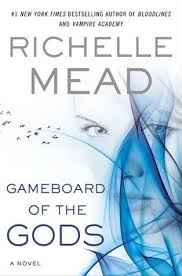
Book Review: Gameboard of the Gods by Rachel Mead

Pros: fascinating characters, interesting world, exciting climax

Cons: pacing, gods don't make much of an appearance

RUNA - the Republic of United North America - was founded after the Decline, a period in which thousands died, and which people believe was caused by three things: disease, religion and cultural separation.  Servitors are tasked with making sure their remaining religions are not a danger to society.  When servitor Justin March is brought back from his exile in Panama to take on a murder investigation with unexplainable evidence, he knows it has something to do with his own inexplicable experiences in the past.  One of which left him with two ravens in his head, and an unknown god asking for his devotion.  He's got less than a month to solve the case before another person is murdered and he and his ward are deported.

For a bodyguard he's given Mae Koskinen, a member of the praetorian guard, elite soldiers with implants that provide faster reflexes and greater strength.  A member of the upper class, which was allowed to avoid the gene mixing forced on others after the Decline, Mae has surprisingly perfect genes.  While finding each other attractive, a misunderstanding upon meeting creates tension between them, even as Mae attracts gods looking for perfect followers.

The novel jumps between three viewpoints, those of Justin, Mae and Teresa, Justin's ward from Panama, whom he's hoping to give a better life.  Teresa, as a fish out of water, is the reader's introduction to the politics and history of this new world.  The author builds things slowly, making you piece together what's happened.  Only through Teresa do you get any concentrated information.  There are no info dumps.  You have to pay close attention to what's being said as conversations are completely natural, since the characters know the context for what's happening, even if you, as the reader, don't.  As such, it takes a while to feel comfortable in this world.

This is the first book of a new series and is basically set up for what's to come.  The aspects of the book that interested me, the murder mystery and the idea of gods playing with the lives of humans, were not as central to the plot of this book as I'd expected.  The investigation into the murder stalls a bit and only picks up around the half way point in the book.  As a result, I found the pacing to be very uneven.  The opening is fascinating with a lot of information being imparted to the reader.  Then there's the move to the RUNA, where stuff happens, including learning most of the information about the country's background, but little plot development.  The plot picks up again and things stay interesting until the climactic ending.  The second quarter stalls though, and as a reader I couldn't understand why so little was being done with regards to the murder investigation.  I was hoping for something akin to Three Parts Dead by Max Gladstone, but what I got was a strange not quite romance, with the protagonists obviously wanting each other but kept apart for various reasons.

While I loved Mae and Teresa, there were times Justin drove me nuts.  He's such a smug SOB.  Still, watching the characters interact was amusing, even when either Justin or Mae manufactured another reason they couldn't have sex again.

I was disappointed by how little the gods showed up.  The ending makes me hopeful that this aspect will have a larger role in the next book.  Indeed, this more than anything made the novel feel like a set up.  It was as though this entire book was for readers to understand the world and characters so the next book could start dealing with the gods and their intrigues.  Not to say that this book ignored the intrigue, the gods do make appearances, but both Mae and Justin try to ignore what's happening until they're no longer given that option.

Speaking of Justin and his god, I was surprised that it took him so long to figure out who He was.  The rune, I thought, gave it away pretty quickly.

I'm not sure who to recommend this book to.  There's a little bit of everything - fighting, romance, mystery, dystopia - but not enough of any one thing to say: "This is for you if you like..."  I suspect the next book will have more focus, given how this one ended.  The writing is good and the series shows promise, yet I feel this book leaves the reader wanting more.   

Tuesday, May 21, 2013

Book Review: The 5th Wave by Rick Yancey

Pros: horrifying invasion story, believable protagonists, compelling story

Cons: 

For Parents: some swearing, kissing, the violence isn't graphic but there are child soldiers, executions, and murder

Cassie has survived the first 4 waves of the alien invasion: light's out, surf's up, pestilence and the silencer.  Seven billion people didn't, including her mother and father.  Her five year old brother was taken away in the 4th wave.  Now she waits for the 5th wave and the courage to keep the promise she made to her brother, that she'd come after him.

This is a brutal invasion story.  These aliens know how to wipe out humanity and do so in sweeping waves, each more destructive than the last.  Through Cassie's eyes we learn about the 4 previous waves, and through her eyes, and those of a few other characters, we slowly learn what the 5th and final wave is.

There's a fair amount of violence, particularly when the child soldiers come into the picture.  But it's violence that serves a purpose and isn't graphically portrayed.  This is a book that questions humanity.  What will humans do to survive?  What makes you human in the first place?  The book doesn't answer these questions, making it a great jumping point for discussion.

The characters are believable, falling apart under the pressures of the new world and picking themselves up again because doing otherwise means death.  This makes the book difficult to put down.  The writing is intense and while you may see the revelation that is the 5th wave coming, it doesn't stop it from being horrifying in its implications.

The ending is very tense, though I'm not sure I believe the kids could accomplish everything they do, and it ignores the larger picture.  But it does give a good closure for the book.

I highly recommend it.

Thursday, May 16, 2013

Book Review: Up Against It by M. J. Locke


Pros: hard SF, interesting characters, complex interconnected story lines

Cons: characters sometimes solve problems too easily, ending felt too pat

Jane Navio manages resources for 25 Phocaea, an asteroid settlement.  When an accident destroys most of the current shipment of ice that provides water, air and fuel for the colony, she's beset by numerous problems.  A feral sapient is born from the disaster and must be dealt with before it creates havoc and the martian mob appears to be the only ones in possession of enough ice to save them.  But Jane's dealth with the mob before, on her previous home, Vesta.  She barely escaped with her life.  Many others she knew weren't so lucky.

Meanwhile, four young bikers who happened to be at the scene of the accident, keep getting in and out of trouble as they cross paths multiple times with those investigating and those exacerbating the crises.
This is a clever hard SF story with multiple major conflicts and some great protagonists.  Jane is a complex character who's used to dealing with politics even though she's not keen on them.  She's first introduced making a life or death decision reminiscent of Ripley, but while she's got a cold exterior, she's got a sense of morality that won't let her deal with the mob, even when their ice shipment appers to be the colony's only means of survival.

While the book focuses on certain people, it's clear that this is a large colony, with multiple layers of bureaucracy that are mentioned when necessary, but not in enough detail to swamp the book.  I only remember one occasion where a name was mentioned and I couldn't place it because it was a beurocrat only mentioned in passing before.

The larger world is also shown to have complex politics and economics, even if they're only hinted at.  There's the martian mob, the 'Stroders (cameras that record what happens in the colony) sending data to reality TV watchers on Earth, and the Earth politics that made gene splicing illegal and forced the Viridians to emigrate.  Apparently Canada's no longer a nice place to live, as it's referenced as having refuge camps and detainee centres.

I appreciated the mix of races and religions represented, as well as sexualities, from the expectant homosexual couple barely mentioned in a park to the Viridians who prefer non-gendered pronouns that reflect their gene spliced states.

One of my favourite things in the book was Tonal-Z, a music based programming language used to talk to the feral sapient.  The acknowledgements credit a real life interface concept as the genesis for it and I'd have loved to see more of it in action.

The only problems with the book that I found were that the 4 teens kept running into more and more problems in a way that started to feel manufactured even though there were logical reasons why they were in each of the places.  And while I liked the fact that, given the locations, characters realized if they were going to get out of bad situations they needed to save themselves as the chances of someone else learning of their problem and/or arriving in time to help were slim, there were a few times when characters got out of tough spots remarkably easily.  Similarly, given all the problems the protagonists faced, the ending seemed a little too pat.  

If you're looking for space battles, look elsewhere.  There are a few fight scenes (which are all remarkably different), but on the whole this is a cerebral SF novel.

If you like interesting science, cool characters, depictions of what it might be like to live in space and complex world building, then give this book a try.

Friday, May 10, 2013

Author Interview: Wesley Chu

Novel: The Lives of Tao

Website: www.chuforthougth.com

> What is The Lives of Tao about? 
Here’s the 140 character tweet version.
Loser meets snarky alien. Gets in shape. Fights war over control of humanity’s evolution. Finds a girlfriend. Not in order of importance.

> What drew you to writing about alien brain hitchhikers? 

I've always been fascinated with history not so much for what happened, but why things happened. I didn't want to rewrite it. History is fascinating enough as it is, but I wanted to explore the logic behind it. How did we get to where we’re at today? What were these famous historical figures thinking?

My original idea was to explore and retell that why, and tie it in with the present. Basically, is it murder or manslaughter, because that matters. Now, let's toss in a few more variables. Add an alien civil war, toss in a lazy loser who hates his life, and let the fun begin.

> What made you want to be a writer when you already know kung-fu and moonlight as an actor? 

I often say a writer can’t help but write. My first short story was in second grade when I wrote about the planets in the solar system always running into each other and getting into fist fights. My English professor Father read it and was like “this doesn't suck.” And if a traditional Asian parent tells you that, it must be pretty decent.

I've always had interests in many different hobbies, but writing was the one thing I always came back to. At the end of the day, when I had to choose what I wanted to do with my life, writing won out. Getting a little older of course helps in the decision making process. I’m not as limber as I used to be, you know.

> The protagonist of The Lives of Tao, Roen Tan, shares your Information Technology day job. Do you have anything else in common?

We’re both terribly insecure, love pizza, and hear voices in our head. Oh, and we’re both Kung Fu masters and we both tried to mug someone who was trying to mug us.

> If you could, would you change places with any of your characters?

Good question. That’s a tough one. On one hand, it would be awesome to have this eternally wise alien who once invented Tai Chi and inhabited great historical figures doling out free advice. On the other hand, getting caught in an alien civil war and hunted by an international cabal sounds like it would suck. And I heard the job doesn't pay well either.

In the end though, I probably wouldn't do it. After all, as an author, I already have the best job in the world. Besides, I have a very low pain threshold.

> When and where do you write?

I used to do the whole cafĂ© circuit around Chicago, but it kind of became a waste of time. These days, I write at home. There’s something to be said about having a set place and time every day that gets someone in the right frame of mind to write. I also get to write in my bathrobe.
  
> What’s the best/worst thing about writing? 

The best thing about writing is creating that story. It’s the most difficult and most rewarding thing I've ever done. The downside is these books are our babies. I lived, ate, and dreamt The Lives of Tao for years, and I’m just so ready to release it to the world. It’s like the world’s longest pregnancy.

> What is something you didn’t know about the publishing industry before you had your first book published?

The author needs to do a lot of marketing. You don’t just write a book and let the publisher do the rest. In the age of social networking, it’s up to the author to engage and grow his fan base. It’s a lot of work, and can be a massive time sink that could be spent writing instead.

However, there’s also this direct connection with the reader that an author makes that is very rewarding as well. Guess while we’re at it, please look me up at:

Twitter: wes_chu

Facebook: facebook.com/wesleychuauthor

Website: www.chuforthougth.com

> Do you have any advice for hopeful authors?

Write for yourself, not for the money or fame. The odds are slim you’ll get much of either. It’s a long road filled with potholes and road kill. Keep at it. Don’t ever show anyone your first draft. Keep reading books as you write. Don’t lose touch with your friends.

And get a dog or cat. Trust me on that last one. Eva Da Terrordale dragging me out for walks was the only thing that got my increasingly pasty white arse to see the sun once in a while.

> Any tips against writers block? 

Keep writing. Write crap. Hate your words, but keep at it. It’s the only way you’ll bust out of the writers block. If you can’t think of anything to write, pretend you don’t have a backspace key and just plug away. Write about your day, your lunch, about how much your hamster Harold means to you. Just get something down and worry about sorting things out later.

And then have a scotch; neat. Then maybe an ice cream; just not at the same time. It doesn't taste good together. I’ve tried. You’ll feel better afterward.

> How do you discipline yourself to write?

You also have to treat writing as a priority. Give it the same respect and passion you would for anything else you’re serious about. It shouldn’t be something you do at the end of the day if you have time. Writing should be something you feel guilty for not doing.

Be hard on yourself. Go to war with it. Conquer it. Always remember have a beer with it at the end of the day. Then do it all over again tomorrow

> What's the first novel (published or unpublished) that you wrote and how long did it take to write it? How many rejection letters did you get for it?

The first book I ever wrote was a 190k monstrosity called Woes, Toads, and Crossroads. How many rejections do you think I got? =) It took a year to write the rough draft and was pretty much a hot mess.

I will say this. It was probably the most important thing I’ve ever written. The lessons I learned from it were invaluable for my writing career.

Tuesday, May 7, 2013

Book Review: Swans & Klons by Nora Olsen


Pros: interesting premise, great characters, positive depictions of lesbian relationships, positive depictions of handicapped, thought provoking, doesn't provide easy answers, great use of linguistical shifts

Cons: underdeveloped world-building, less development than the story deserved

For Parents: no sex but there is kissing, swearing done in German, minor violence

After a mysterious disease turned all men into 'Cretinous Males' with degenerative disorders, humanity chose 300 specimens of female perfection on which to build Society.  Hatched from tanks, those without modifications are human.  Those with modifications are klons, stronger and without the passions and intelligence of their human similars, they serve so the humans can achieve their full potential. 

Rubrik and Salmon Jo are sixteen, schatzies (lovers), and leaving the academy for their first mentoring assignments in the city.  Rubrik is an artist.  Salmon Jo is a scientist working at the hatcheries.  When Salmon Jo makes a startling discovery about the klons, their lives are forever changed.

This is a quick, fun read.  The characters are a little quirky and their relationship fantastic (no angst, no unwarranted fights or wafflings of affections, no love triangles, just a nice, functional relationship).

I loved that the girls are products of their society, thinking pregnancy and males (at least on Rubrik's side) are disgusting.  Similarly, the linguistical shifts, adding in some German words (or, German based words) was neat, and I loved their misunderstanding/misuse of the word 'hacker'.

Later in the book there are some descriptions of handicapped people that are done with great care and respect.  Indeed, this is a great book for questioning biases on several accounts, and specifically what makes a person human.  I loved that the author provided no answers, just ethical and philosophical questions

The biggest downside to the book was its low word count.  The publisher lists the page count at 264, but the epub file on my iPad came up to 108.  On numerous occasions the pacing felt rushed as the story jumped from one aspect to another trying to get everything in.  I think the world-building especially suffered here.  There's enough information to follow the story, but I'd have loved to see it fleshed out better, especially given the complexity of the issues being addressed.

Also, things on the whole go too easily for the girls.  With very little planning most of their crazy schemes turn out ok, which seemed a bit far fetched considering what they were doing.

Still, it's an interesting read.

Tuesday, April 23, 2013

Book Review: Terminal Point by K. M. Ruiz


*  Note, this is a review for the second book in the series and as such contains spoilers for the previous book.


Pros: lots of action, powerful characters had limitations, complex plot gets resolved


Cons: hard to believe just how much Lucas's group achieves with so little rest and time to heal from previous injuries

This is the second volume of the Stryker Syndicate duology that started with Mind Storm.  The action starts directly where Mind Storm ended, with Lucas and his group heading to the Arctic while their actions in Buffalo cause problems for the Strykers, the Warhounds and the World Court.  The World Court continues their preparations for leaving the Earth, even as Lucas undermines their efforts.

This is a quick moving book with a lot going on.  Lucas pushes his people on mission after mission, which, considering the amount of damage they take each mission gets a bit hard to believe.  On the other hand, it makes the psions less uber powerful, so the fights have more of a challenge to them.  Indeed, I really liked the fact that psions as powerful as Lucas and Jason had limits to their abilities.  I also liked how lower powered psions could link their abilities, making their enemies powerful as well, even though they're not as highly ranked.

There's non stop action in this book, with so many missions and so many plot threads that all come together in a final, climactic battle that no one, neither psions nor the humans around them, is left unscathed.

If you like post-apocalyptic societies and characters with super powers, you'll love this duology.